
Exploring the Meaning of Eknepho in Greek
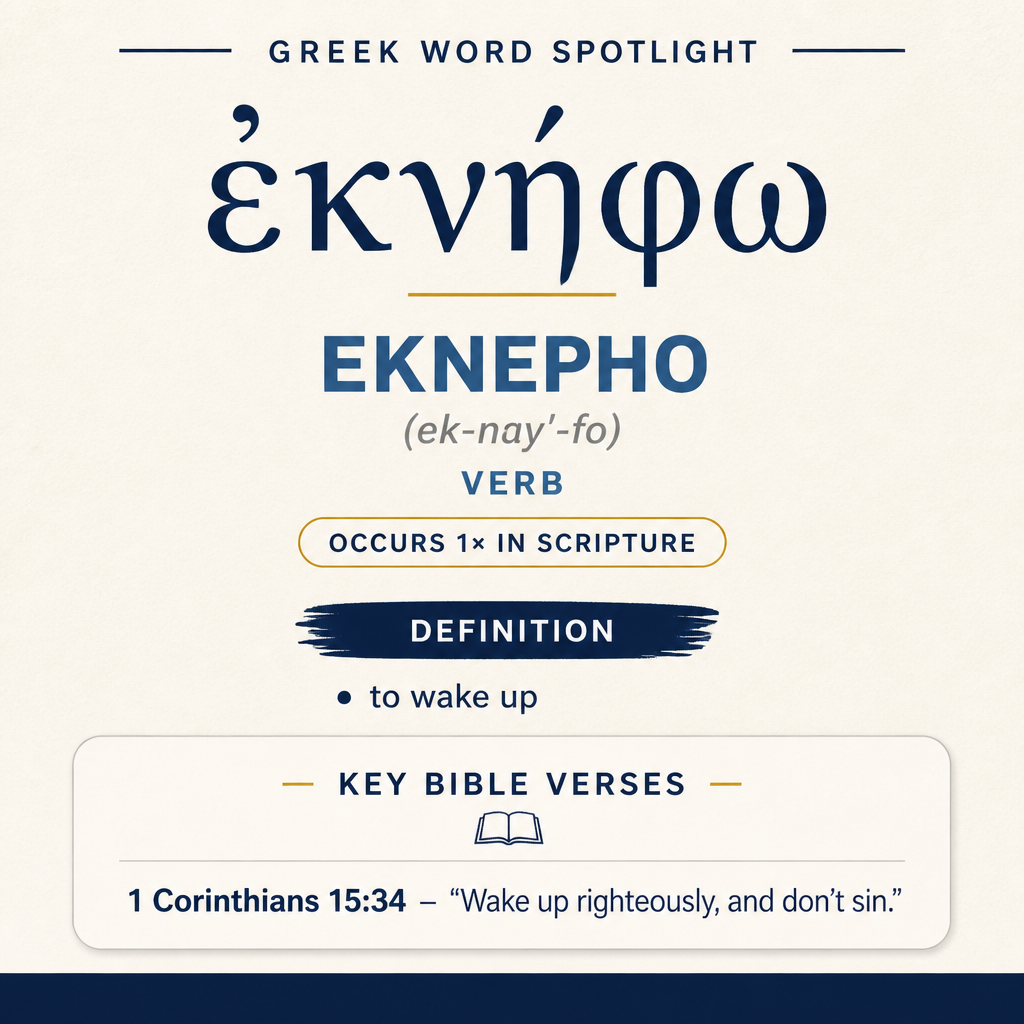
ἐκνήφω means “to wake up” and appears once in Scripture, in 1 Corinthians 15:34.
Verse Context
In 1 Corinthians 15:34 it is used as an imperative: “Wake up righteously, and don’t sin.”
Learn More →ἐκνήφω means “to wake up.” It appears once in the New Testament, in Paul’s exhortation to the Corinthian church about righteous conduct and clear-minded living.
Root and Related Words
ἐκνήφω (Eknepho) is formed from ἐκ (ek), “out from” (Strong’s G1537), and νήφω (nepho), “be sober” (Strong’s G3525). The compounded shape presents an action described as moving “out from” a condition addressed by νήφω, so the verb naturally suits moral and mental alertness in contexts of correction and exhortation.

Occurrences
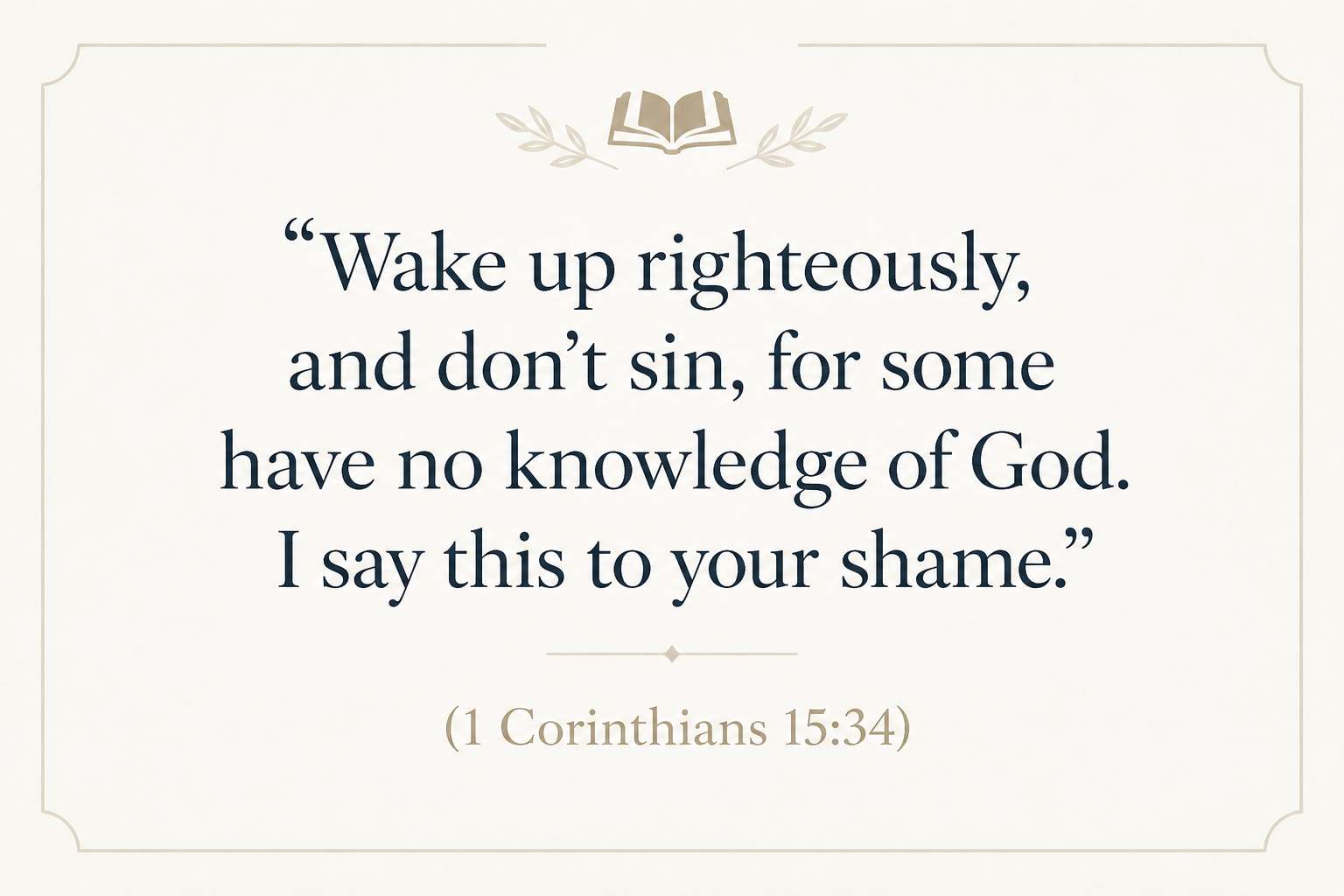
“Wake up righteously, and don’t sin, for some have no knowledge of God. I say this to your shame.” (1 Corinthians 15:34)
In this sentence ἐκνήφω stands as an urgent imperative, calling for an immediate change of state: a rousing from a condition that is being treated as spiritually and morally unsafe. The command is immediately qualified by “righteously,” which frames the waking as more than mere awareness; it is a call to awaken into a pattern of conduct aligned with what is right. The next clause, “and don’t sin,” shows the practical direction of this awakening: the awakened condition is expected to express itself in refusing sin.
Paul grounds the urgency with an explanatory “for”: “for some have no knowledge of God.” In this scene, the summons to wake functions as a corrective to a community situation where ignorance of God exists among “some.” The imperative therefore presses the Corinthians toward a conscious, responsible posture that takes account of the presence of such ignorance. Finally, “I say this to your shame” gives the exhortation a sharply personal edge: the community ought to feel the weight of the situation, and the wake-up call is intentionally bracing, meant to jolt them out of complacency.
Sense and Usage
The sense “to wake up” is deployed here in a moral register: it calls for a decisive transition from a dulled, negligent, or careless condition into one marked by righteousness and restraint from sin. The surrounding language supplies the contours of what this waking looks like. It is not presented as a private experience but as a communal necessity, because the problem named (“some have no knowledge of God”) has implications for the group’s life together. Thus, the verb’s force in this passage is practical and corrective: it demands alertness that issues in changed behavior.
Because the command is paired with “don’t sin,” the waking is treated as the opposite of a state in which sin is allowed room. The passage does not describe the internal mechanics of the change, but it does define its expected outcome: a righteousness that is active (“Wake up righteously”) and a refusal to continue in sin (“and don’t sin”). The explanatory clause about knowledge of God situates the wake-up call within the realm of understanding and recognition: the community is being summoned to a kind of alertness that takes seriously what is known—or disturbingly, what is not known—about God in their midst.
The brief final sentence, “I say this to your shame,” intensifies the usage by showing the rhetorical aim of ἐκνήφω in context: the command is meant to sting. It functions as a verbal alarm, intended not to soothe but to awaken by confronting the hearers with the dishonor of their present condition. In this way, ἐκνήφω serves the tone of reproof and the goal of reformation: a wake-up that is both immediate and ethically directed.
Imagery
The imagery carried by ἐκνήφω in this verse is that of being roused to clear, responsible awareness. The verse pairs waking with righteousness and sets it against sin, so the picture is of a community being shaken into moral alertness—called to open its eyes to a serious spiritual deficit (“some have no knowledge of God”) and to respond with conduct that matches what they ought to be.
Sources: Lexical data from Strong’s Exhaustive Concordance and the Translators Brief Lexicon of Extended Strongs for Greek (STEPBible, CC BY). Occurrence data from the Translators Amalgamated Greek New Testament (STEPBible, CC BY). Scripture quotations from the World English Bible (public domain).




