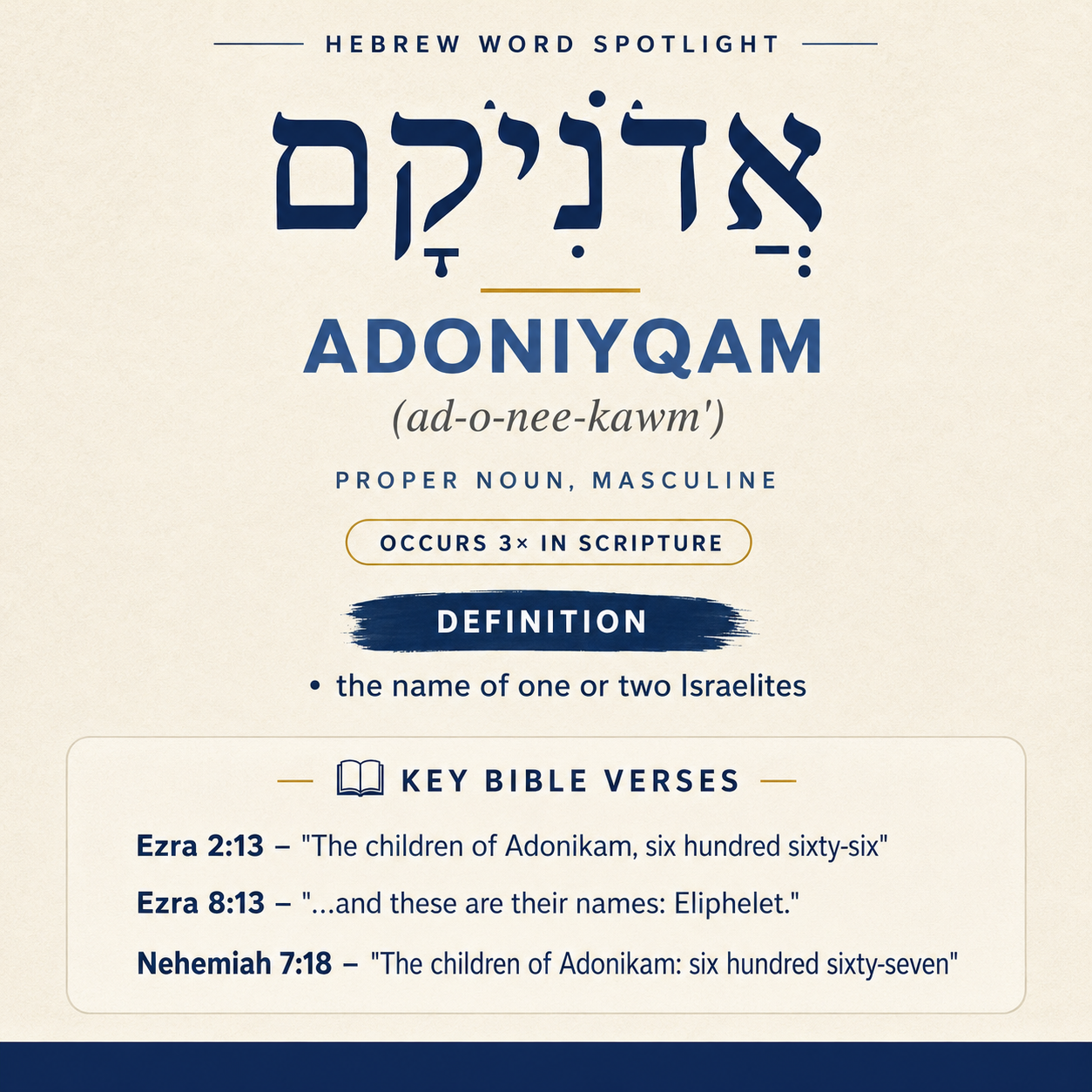
‘Adoniyqam

ad-o-nee-kawm’
Parts of Speech: Proper Name Masculine

‘Adoniyqam Definition

NAS Word Usage – Total: 3
Adonikam = “my lord arose”

  1. the head of an Israelite who returned from exile

Understanding ‘Adoniyqam in Hebrew

The term ‘Adoniyqam (אֲדוֹנִיקָם) is relatively obscure and can pose a challenge for many studying Hebrew scripture. Its meaning hinges on both linguistic components and biblical context. In Hebrew, ‘Adoniyqam translates to “My Lord is Qam,” where “Adon” means “lord” or “master,” and “qam” can denote “to arise” or “to establish.”

Books Worth Reading:
Sponsored
Book 3154Book 3131Book 3162Book 3129Book 3161

A direct, clear answer to the meaning of ‘Adoniyqam reveals itself as a personal invocation or expression of loyalty to a lord or master, entwined with the idea of standing or establishing authority.

Linguistic Breakdown of ‘Adoniyqam

The Components of ‘Adoniyqam

To fully grasp ‘Adoniyqam, examining its components is essential. The word can be broken down into two parts: “Adoniy” and “qam.”

  • Adoniy: This term is a possessive form of “Adon,” which means “lord” or “master.” The suffix “-iy” indicates a personal association, similar to “my” in English. In biblical texts, “Adon” often refers to God or human authority figures.
  • Qam: This Hebrew root can refer to rising or standing up. In various contexts, it suggests a theme of establishment, both physically as in standing upright and metaphorically in terms of authority or prominence.

Together, ‘Adoniyqam signifies a relationship of dependency or loyalty to a master, coupled with the notion of standing firm or ready for action.

Books Worth Reading:
Sponsored
Book 3154Book 3131Book 3162Book 3129Book 3161

Cultural and Historical Context

Scriptural references in the Hebrew Bible provide further insight into the significance of ‘Adoniyqam. Authority dynamics between individuals, such as between servants and masters, are common themes in biblical narratives. The wording creates an intimate bond between a servant and their lord, reflecting a serious commitment to serve and defend their post.

One example can be seen in the lives of biblical figures like David, who, in his interactions with King Saul, often referred to Saul with respect, identifying him as “my lord” in various discussions. This stylistic choice mirrors the essence of ‘Adoniyqam—an acceptance of hierarchy weaved with deep loyalty.

Practical Applications of ‘Adoniyqam

Modern-Day Examples

Understanding ‘Adoniyqam can be useful for those exploring faith or participating in Jewish communities. Since the term emphasizes lordship and support, it finds relevance in spiritual practices and communal gatherings. For instance:

Books Worth Reading:
Sponsored
Book 3154Book 3131Book 3162Book 3129Book 3161
  • Prayer: Individuals may invoke ‘Adoniyqam in personal prayers, addressing God as their Lord while acknowledging their trust in God’s authority and readiness to rise to challenges.
  • Literature: Writers drawing on biblical themes can embed the term in modern tales where authority and loyalty clash or harmonize in narratives. Integration of biblical terms helps emphasize the character motivations that resonate with timeless support and devotion.

Historical References in Scriptures

In biblical books, references to master-servant relationships can often include similar linguistic structures to ‘Adoniyqam. For example, in the Book of Exodus, the concept of servitude is significant. When the Israelites, who were seen as servants of Yahweh, regarded Him as their Lord, it mirrors the sentiment of ‘Adoniyqam.

Another historical reference lies in the Book of Psalms, particularly Psalm 110, which speaks about the “Lord” granting the authority to reign victoriously. The idea that God can empower individuals resonates with the core meaning of ‘Adoniyqam, underpinning a relationship where divine support is sought and necessary.

Theological Implications of ‘Adoniyqam

Authority and Power Dynamics

The mention of ‘Adoniyqam in theological discussions highlights the dynamics of authority not only between humans and God but also among individuals. It reveals the balance of power and reverence present in many biblical accounts.

Books Worth Reading:
Sponsored
Book 3154Book 3131Book 3162Book 3129Book 3161

In a religious setting, when one refers to God using ‘Adoniyqam, it underscores the need for recognition of divine authority. This recognition fosters a spirit of humility among believers, encouraging them to accept guidance and direction from their spiritual leaders or from God.

Loyalty and Faith

Loyalty is a prevalent theme in many religious teachings. The term ‘Adoniyqam encapsulates the reciprocal relationship between a servant and the lord, reinforcing the idea that loyalty often stems from understanding and recognizing authority.

The concept can extend to various spheres, such as workplace environments or family settings. By using the principles inherent in ‘Adoniyqam, individuals can cultivate an atmosphere of mutual respect and duty, ensuring that they remain steadfast in service and loyalty to those in authority.

Books Worth Reading:
Sponsored
Book 3154Book 3131Book 3162Book 3129Book 3161

Examples from Hebrew Scriptures

Personal Relationships

In everyday decision-making, people might turn to Scripture for guidance. For example, when individuals consider the implications of their choices, they might reflect on relationships where loyalty plays a crucial role. A family member might express loyalty and respect through actions reminiscent of ‘Adoniyqam.

Imagine a scenario where an elder child takes care of their younger siblings while their parents are away. This lament of careful stewardship can echo the essence of ‘Adoniyqam—a recognition of caring for their authority through protecting others and demonstrating loyalty.

Community and Worship

Additionally, in communal worship, the invocation of terms similar to ‘Adoniyqam can often be found in prayers or songs sung in honor of God. For instance, during worship services, congregations may use phrases that express loyalty and devotion to God as their Lord. Such invocations foster a sense of unity among worshippers, illustrating their collective commitment to a higher authority.

Books Worth Reading:
Sponsored
Book 3154Book 3131Book 3162Book 3129Book 3161

In essence, the lessons derived from ‘Adoniyqam guide individuals toward recognizing the importance of loyalty, respect, and the dynamics of authority in various contexts, whether personal, communal, or spiritual.

Learning About ‘Adoniyqam in Educational Settings

Academic and Religious Studies

In academic settings, the term ‘Adoniyqam can be explored within courses focused on Hebrew linguistics, biblical studies, or theology. By examining the word closely, students can gain insight into the cultural and historical contexts that shaped its use in ancient texts.

Educators might encourage students to analyze related terms and their implications in literature or modern-day applications. Group discussions or projects can focus on how authority and loyalty manifest in both biblical narratives and contemporary situations.

Books Worth Reading:
Sponsored
Book 3154Book 3131Book 3162Book 3129Book 3161

Language Learning

For those learning Hebrew, understanding words like ‘Adoniyqam can be foundational in grasping idiomatic expressions and the richness of language. It opens pathways for deeper engagement with the text, allowing learners to express thoughts on authority with more nuanced vocabulary. By exploring these connections, students may develop a deeper appreciation for the language and its expressive capacity.

Conclusion on the Exploration of ‘Adoniyqam

‘Adoniyqam serves as a lens to examine concepts of authority, loyalty, and loyalty in biblical literature and modern applications. Through careful study and real-world exploration, individuals can uncover the layers of meaning encapsulated in this term, revealing its significance in their lives and communities.

Little Known Secrets

The word ‘Adoniyqam holds rich meanings and intriguing aspects in Hebrew that many might not be aware of.

Books Worth Reading:
Sponsored
Book 3154Book 3131Book 3162Book 3129Book 3161
  1. Meaning Breakdown: The name ‘Adoniyqam can be broken down into two parts: “Adon” meaning “lord” or “master,” and “iqam,” which can be interpreted as “he will rise” or “he will establish.” Together, it conveys the idea of a master who brings elevation or establishment.
  2. Biblical Context: ‘Adoniyqam appears in the context of a specific family line in the Hebrew Bible, where it is linked to one of the temple servants. This connection adds historical significance and highlights the role of the Levites in ancient Israel.
  3. Cultural Significance: Names like ‘Adoniyqam were often given to children during biblical times to reflect hope or aspirations that the family had for them. In this case, it could signify a desire for the child to rise in status or in spiritual matters.
  4. Linguistic Influence: The roots of ‘Adoniyqam can be seen in various other Hebrew terms that involve authority or ascension. This shows a broader pattern in the Hebrew language where names often encapsulate traits or aspirations.
  5. Cross-References: The root “Adon” has been associated with divine authority in many passages throughout the Bible, linking ‘Adoniyqam to themes of leadership and guidance, further emphasizing the expected role of virtuous leadership within a community.
  6. Modern Usage: While ‘Adoniyqam is not commonly used today, variations of “Adon” are often found in modern Hebrew names, showing how historical names can evolve while still maintaining a connection to their original meanings.
  7. Numerical Value: In Hebrew numerology, called gematria, each letter has a numerical value. The letters in ‘Adoniyqam add up to a specific number that can offer insights into spiritual interpretations and connections in biblical texts.

Conclusion

In summary, the Hebrew word “Adoniyqam” holds significant meaning. It combines elements representing authority and ownership, which can reflect a sense of respect and leadership. Understanding this term helps us appreciate the depth of language used in biblical texts and how it can shape our understanding of relationships and responsibilities in the ancient context. As we explore words like “Adoniyqam,” we gain insights not just into language, but also into the culture and values of the people who spoke it.

Common Questions Related to What Does ‘Adoniyqam Mean In Hebrew

Q. What does the word ‘Adoniyqam mean in Hebrew?
A. ‘Adoniyqam means “my Lord is the one who rises” or “my master has risen” in Hebrew.

Q. How is ‘Adoniyqam pronounced?
A. ‘Adoniyqam is pronounced as “ah-doh-nee-yahm.”

Books Worth Reading:
Sponsored
Book 3154Book 3131Book 3162Book 3129Book 3161

Q. Is ‘Adoniyqam a common word in the Hebrew Bible?
A. No, ‘Adoniyqam is not commonly found in the Hebrew Bible; it is more of a personal name or title.

Q. What parts make up the word ‘Adoniyqam?
A. The word ‘Adoniyqam is made of “Adonai,” meaning “my Lord,” and “qam,” which means “to rise” or “to stand up.”

Q. Can ‘Adoniyqam be used as a name?
A. Yes, ‘Adoniyqam can be used as a personal name, often reflecting a relationship with God.

Books Worth Reading:
Sponsored
Book 3154Book 3131Book 3162Book 3129Book 3161

Q. What does ‘Adoniyqam reveal about someone’s faith?
A. The name ‘Adoniyqam shows a believer’s acknowledgment of God’s authority and presence in their life.

Q. How does ‘Adoniyqam compare to other names in the Bible?
A. ‘Adoniyqam is similar to other biblical names that incorporate “Adonai,” emphasizing leadership or divinity.

Q. Is there a specific story related to ‘Adoniyqam in the Bible?
A. There isn’t a specific story about ‘Adoniyqam in the Bible; it is more about its meaning and usage in names.

Books Worth Reading:
Sponsored
Book 3154Book 3131Book 3162Book 3129Book 3161

Q. Why might someone choose the name ‘Adoniyqam for a child?
A. Parents might choose ‘Adoniyqam to express their hope for the child to have a strong faith or to honor God.

Q. How does understanding ‘Adoniyqam help with studying Hebrew?
A. Knowing the meaning and components of ‘Adoniyqam can deepen understanding of Hebrew names and their significance in the Bible.

About the Author

Ministry Voice

{"email":"Email address invalid","url":"Website address invalid","required":"Required field missing"}

Want More Great Content?

Check Out These Articles 

mba ads=78