
Exploring the Meaning of Suneudokeo in Greek
συνευδοκέω means “to agree to” and appears six times in Scripture: Luke 11:48; Acts 8:1; Acts 22:20; Romans 1:32; 1 Corinthians 7:12–13.
Core Meaning
συνευδοκέω means “to agree to.” In Luke 11:48 it is rendered “consent to.”
Learn More →Acts Usage
In Acts 8:1 and Acts 22:20, Saul is described as “consenting to his death.” Both references connect the word with agreement in Stephen’s death.
Learn More →Household Context
In 1 Corinthians 7:12–13, it describes a spouse being “content to live with” an unbelieving partner. The term is used for agreement to continue the marriage.
Learn More →συνευδοκέω means “to agree to.” In the New Testament it appears in scenes of moral alignment—sometimes with violence and persecution, sometimes with ongoing domestic life—showing how “agreement” can range from active complicity to settled willingness.

Occurrences
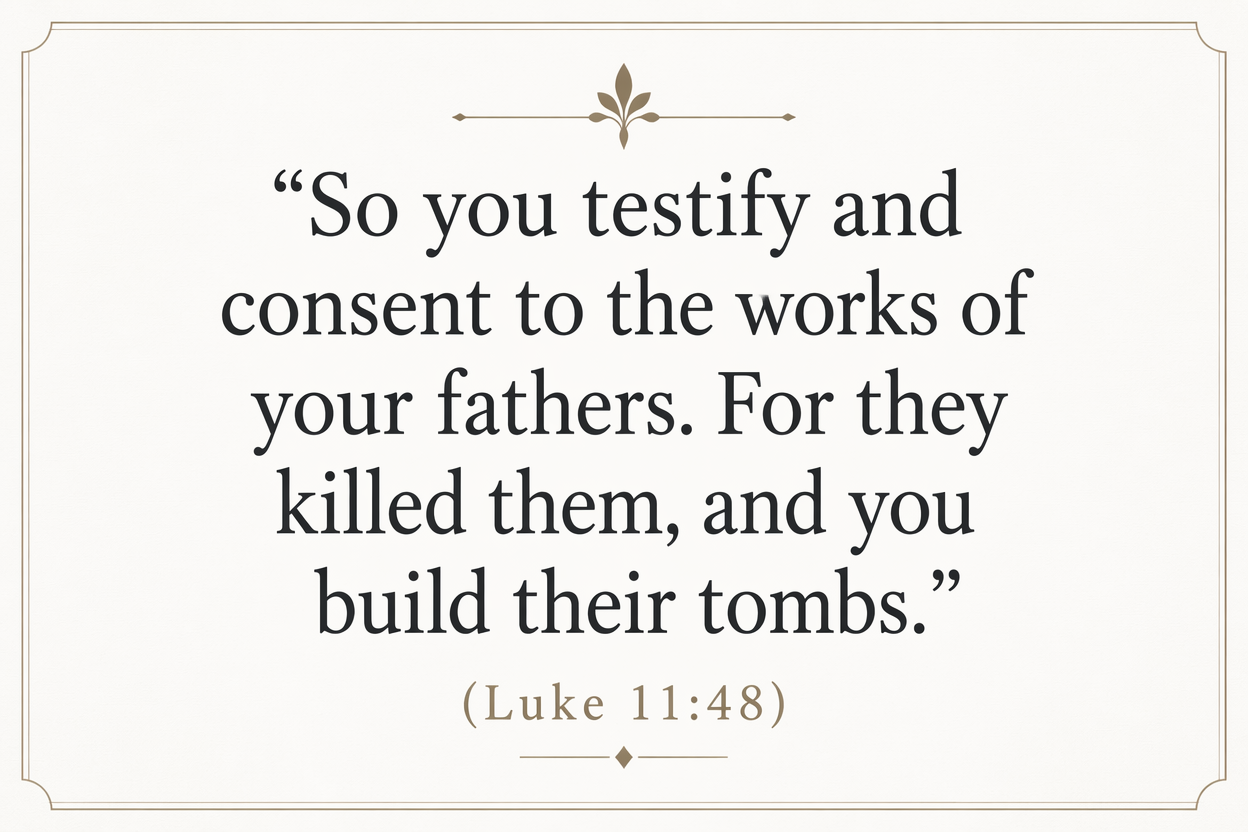
“So you testify and consent to the works of your fathers. For they killed them, and you build their tombs.” (Luke 11:48)
Here the verb is paired with “testify,” placing agreement in the realm of public alignment rather than private opinion. The sentence sets “consent to the works of your fathers” alongside two actions: “they killed them” and “you build their tombs.” In this scene, “agree to” functions as a verdict of solidarity with a legacy of deeds, not merely as a passive acknowledgment. The contrast between killing and tomb-building frames the consent as something that can be expressed through later acts that appear respectful while still signaling approval of the earlier “works.”
“Saul was consenting to his death. A great persecution arose against the assembly which was in Jerusalem in that day. They were all scattered abroad throughout the regions of Judea and Samaria, except for the apostles.” (Acts 8:1)
συνευδοκέω describes Saul’s stance at the moment of a killing: “consenting to his death.” The following lines immediately narrate consequences for the community—“A great persecution arose” and widespread scattering—so Saul’s agreement is presented as part of a broader pattern of hostility. The verb marks an inward alignment that has outward effects: consent becomes one of the forces that belongs with persecution, helping explain why the assembly is driven from Jerusalem.
“When the blood of Stephen, your witness, was shed, I also was standing by, consenting to his death, and guarding the cloaks of those who killed him.’” (Acts 22:20)
This retelling intensifies the concreteness of the consent. The speaker locates himself physically (“standing by”) and links his agreement with supportive participation (“guarding the cloaks of those who killed him”). In this setting, “agree to” is not portrayed as a detached mental assent; it is embedded in proximity to violence and in facilitation of the killers’ actions. The verse’s details make consent visible through posture and assistance: agreement is the attitude that fits his presence and his guarding.
“who, knowing the ordinance of God, that those who practice such things are worthy of death, not only do the same, but also approve of those who practice them.” (Romans 1:32)
Here the verb is rendered as “approve,” and the sentence establishes a twofold alignment: people “do the same” and they “approve of those who practice them.” The verse frames agreement as a social and moral reinforcement of wrongdoing—an endorsement offered to others who “practice” such things. The clause “knowing the ordinance of God” sharpens the significance of approval: the agreement is given in spite of knowledge that these practices carry a verdict (“worthy of death”). In this context, “agree to” functions as communal complicity, expressed not by committing the acts alone but by consenting to the practitioners.
“But to the rest I—not the Lord—say, if any brother has an unbelieving wife, and she is content to live with him, let him not leave her.” (1 Corinthians 7:12)
In this pastoral instruction, the verb appears in a domestic setting: “she is content to live with him.” Agreement is expressed as willingness to continue shared life within a marriage that includes religious difference (“an unbelieving wife”). The guidance that follows—“let him not leave her”—treats this consent as a stabilizing condition for the relationship. The verb here points to ongoing readiness rather than a single moment of assent: a settled agreement to remain together.
“The woman who has an unbelieving husband, and he is content to live with her, let her not leave her husband.” (1 Corinthians 7:13)
This sentence mirrors the previous one, applying the same verb to the husband: “he is content to live with her.” The symmetry highlights that the consent in view is mutual in principle, not gender-specific. Again, the willingness to continue living together is treated as a decisive factor for the believing spouse’s action (“let her not leave her husband”). In this scene, “agree to” carries the practical sense of consenting to the shared household and the continuity of marriage.

Sense and Usage
Across these passages, “to agree to” consistently marks alignment with an action or with those who perform it, but the nature of that alignment varies with the situation. In Luke 11:48, agreement is tied to communal identity (“your fathers”) and to deeds that span generations, where present behavior can signal solidarity with past “works.” In Acts 8:1 and Acts 22:20, the verb describes agreement in the face of lethal violence; it can be expressed by being “standing by,” by practical assistance (“guarding the cloaks”), or by the stance of consent itself. Romans 1:32 extends the idea beyond a single event to moral culture: people not only commit acts but also “approve of those who practice them,” so agreement becomes a reinforcing judgment that strengthens a network of practice.
In 1 Corinthians 7:12–13, the same verb shifts into the sphere of daily life. Agreement is not approval of wrongdoing or complicity in harm, but willingness to continue a shared life together: being “content to live with” one’s spouse. The continuity between these uses lies in the core idea of consent—an inward “yes” that positions a person alongside a course of action or alongside other people. The differences lie in what that “yes” attaches to: tomb-building that aligns with murderous “works,” consent that accompanies persecution, approval that endorses practitioners, or contentment that sustains marriage.
The passages also illustrate that agreement can be either momentary or sustained. Acts presents consent at a decisive moment (“his death”) where agreement is bound up with an event. The Corinthian instructions describe agreement as an ongoing state (“content to live with”), where consent is tested over time in the ordinary continuance of the relationship. Romans portrays agreement as a social posture—approval offered to “those who practice”—which implies repeated judgments that shape communal behavior.
Imagery in Context
The imagery surrounding συνευδοκέω is often concrete: tombs being built (Luke 11:48), a death that sparks scattering (Acts 8:1), cloaks guarded beside spilled blood (Acts 22:20), and the quiet persistence of sharing a home (1 Corinthians 7:12–13). Even where the scene is more conceptual, “approve of those who practice them” (Romans 1:32), the verb still points to visible alignment—approval that strengthens others in their actions. In these settings, “agree to” is never weightless; it is portrayed as a stance that connects a person to deeds and to communities, for harm or for continued peace in household life.
Sources: Lexical data from Strong’s Exhaustive Concordance and the Translators Brief Lexicon of Extended Strongs for Greek (STEPBible, CC BY). Occurrence data from the Translators Amalgamated Greek New Testament (STEPBible, CC BY). Scripture quotations from the World English Bible (public domain).





