Exploring the Meaning of Sidon in Greek
Σιδών means “Sidon” and appears 10 times in the Greek New Testament, including Matthew, Mark, and Luke.
Gospel Occurrences
It occurs in Matthew 11:21–22 and 15:21, Mark 3:8 and 7:24, 7:31, and Luke 6:17 and 10:13.
Learn More →In Context
Sidon is paired with Tyre in Jesus’ warnings (Matthew 11:21–22; Luke 10:13) and in geographic descriptions of his movements (Matthew 15:21; Mark 7:24, 7:31).
Learn More →Σιδών refers to Sidon, a named place that appears across the Gospels in Jesus’ public ministry and in Acts within Paul’s sea voyage. In these passages it functions as a fixed geographic point that helps locate crowds, travel routes, and comparisons made in warnings about judgment.

Occurrences
“Woe to you, Chorazin! Woe to you, Bethsaida! For if the mighty works had been done in Tyre and Sidon which were done in you, they would have repented long ago in sackcloth and ashes.” (Matthew 11:21)
Here Sidon is paired with Tyre as a comparative setting: it marks an alternative audience imagined to have responded differently to “the mighty works.” The mention of Sidon gives the warning a concrete frame by naming a specific locale whose hypothetical reaction (“repented long ago in sackcloth and ashes”) intensifies the rebuke of Chorazin and Bethsaida.
But I tell you, it will be more tolerable for Tyre and Sidon on the day of judgment than for you. (Matthew 11:22)
Sidon again stands with Tyre, now in a direct statement about “the day of judgment.” The place name functions as a benchmark in a moral comparison: “more tolerable for Tyre and Sidon” sets an unexpected contrast that heightens the seriousness of the address to Jesus’ hearers (“for you”).
Jesus went out from there, and withdrew into the region of Tyre and Sidon. (Matthew 15:21)
Sidon helps define the destination of Jesus’ withdrawal, forming part of the phrase “the region of Tyre and Sidon.” As a place name it contributes geographical specificity: the narrative movement is not generic travel but a purposeful relocation into a named coastal region.
from Jerusalem, from Idumaea, beyond the Jordan, and those from around Tyre and Sidon. A great multitude, hearing what great things he did, came to him. (Mark 3:8)
Sidon identifies one of several origins for the crowd. In the list of places—Jerusalem, Idumaea, beyond the Jordan, and “around Tyre and Sidon”—Sidon signals the wide reach of Jesus’ reputation: people are coming from multiple regions because they “hearing what great things he did.”
From there he arose, and went away into the borders of Tyre and Sidon. He entered into a house, and didn’t want anyone to know it, but he couldn’t escape notice. (Mark 7:24)
Sidon appears within a travel notice that sets the scene for concealment and discovery. “The borders of Tyre and Sidon” situates the attempt at privacy (“didn’t want anyone to know it”) within a defined territory, yet the narrative tension remains: even there “he couldn’t escape notice.”
Again he departed from the borders of Tyre and Sidon, and came to the sea of Galilee, through the middle of the region of Decapolis. (Mark 7:31)
Sidon here marks the point of departure—“from the borders of Tyre and Sidon”—before the route leads to “the sea of Galilee” and through “the region of Decapolis.” The place name anchors a sequence of movements, giving the travel description concrete waypoints rather than abstract transitions.
He came down with them, and stood on a level place, with a crowd of his disciples, and a great number of the people from all Judea and Jerusalem, and the sea coast of Tyre and Sidon, who came to hear him and to be healed of their diseases; (Luke 6:17)
Sidon appears as part of “the sea coast of Tyre and Sidon,” contributing a coastal orientation to the crowd’s origins. The mention frames those people as coming with clear purposes—“to hear him and to be healed of their diseases”—so Sidon functions as a geographic identifier for hearers and sufferers drawn into Jesus’ ministry.
“Woe to you, Chorazin! Woe to you, Bethsaida! For if the mighty works had been done in Tyre and Sidon which were done in you, they would have repented long ago, sitting in sackcloth and ashes.” (Luke 10:13)
Sidon again serves in a hypothetical comparison tied to “mighty works” and a response of repentance. The wording adds the image “sitting in sackcloth and ashes,” and Sidon’s role is to name a distinct place envisioned as more responsive than the towns being addressed.
But it will be more tolerable for Tyre and Sidon in the judgment than for you. (Luke 10:14)
Sidon remains paired with Tyre as the comparator in the statement about “the judgment.” The place name functions rhetorically: the more tolerable outcome assigned to Sidon sharpens the warning directed at Jesus’ immediate audience (“for you”).
The next day, we touched at Sidon. Julius treated Paul kindly, and gave him permission to go to his friends and refresh himself. (Acts 27:3)
Sidon here is a port of call—“we touched at Sidon”—within a travel narrative told in the first person plural. The place name provides a concrete stop where a specific action becomes possible: Julius’ kindness allows Paul “to go to his friends and refresh himself,” making Sidon a setting for brief relief within the voyage.
Sense and Usage
Across these passages, Σιδών functions as a stable geographic label that does two main kinds of work: it locates movement and it supports comparison. In the travel notices (Matthew 15:21; Mark 7:24; Mark 7:31; Acts 27:3), Sidon is part of a network of named regions and stopping points. Phrases like “the region of Tyre and Sidon” and “the borders of Tyre and Sidon” treat Sidon not as an isolated dot but as one half of a paired expression that marks a recognized area. In Acts, by contrast, the simple clause “we touched at Sidon” uses the name as a precise waypoint whose significance is immediately shown in what happens there—access to friends and a chance to “refresh himself.”
In the crowd scenes (Mark 3:8; Luke 6:17), Sidon contributes to the depiction of scope. The crowd is not drawn only from nearby towns; it includes people “from around Tyre and Sidon” and from “the sea coast of Tyre and Sidon.” In both, Sidon is grouped with other locations, and that grouping builds a geographic map in the reader’s mind: Jesus’ public activity draws a “great multitude” from varied places, and those coastal people come with defined aims—hearing and healing.
In the warnings (Matthew 11:21–22; Luke 10:13–14), Sidon is part of a moral-judicial comparison. The place name is invoked as a counterfactual audience: “if the mighty works had been done in Tyre and Sidon… they would have repented long ago.” The name thus supports an argument about accountability: certain towns have witnessed “mighty works,” and the mention of Sidon heightens the force of the rebuke by naming another locale portrayed as more likely to respond with visible penitence (“sackcloth and ashes”). The second statement in each pair—“more tolerable for Tyre and Sidon… than for you”—uses Sidon as a fixed reference point in the coming judgment, strengthening the warning by anchoring it to a known place rather than leaving it abstract.
Imagery
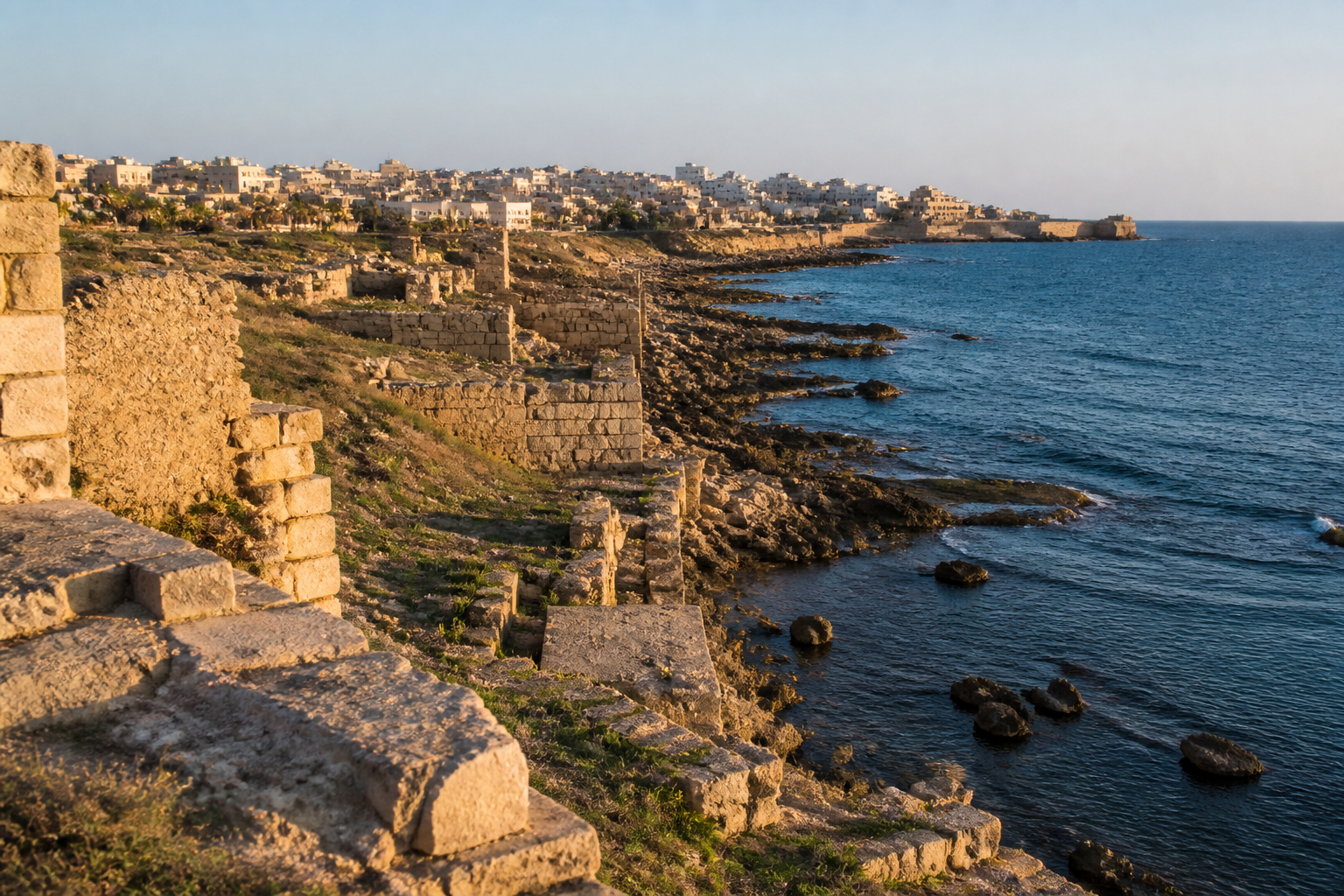
Sidon carries the imagery of a named coastline and a boundary region: “the sea coast of Tyre and Sidon” evokes shoreland from which people travel to Jesus (Luke 6:17), while “the borders of Tyre and Sidon” evokes a defined edge of territory that Jesus enters and departs (Mark 7:24, 7:31). In Acts 27:3, the imagery becomes tactile and immediate—arrival at a harbor (“we touched at Sidon”) where a traveler can briefly step ashore and “refresh himself.” In the judgment sayings, the name shifts from geography to a rhetorical landmark, a place invoked to sharpen the contrast between witnessed “mighty works” and the demanded response of repentance (Matthew 11:21; Luke 10:13).
Sources: Lexical data from Strong’s Exhaustive Concordance and the Translators Brief Lexicon of Extended Strongs for Greek (STEPBible, CC BY). Occurrence data from the Translators Amalgamated Greek New Testament (STEPBible, CC BY). Scripture quotations from the World English Bible (public domain).