Exploring the Meaning of Parakaleo in Greek
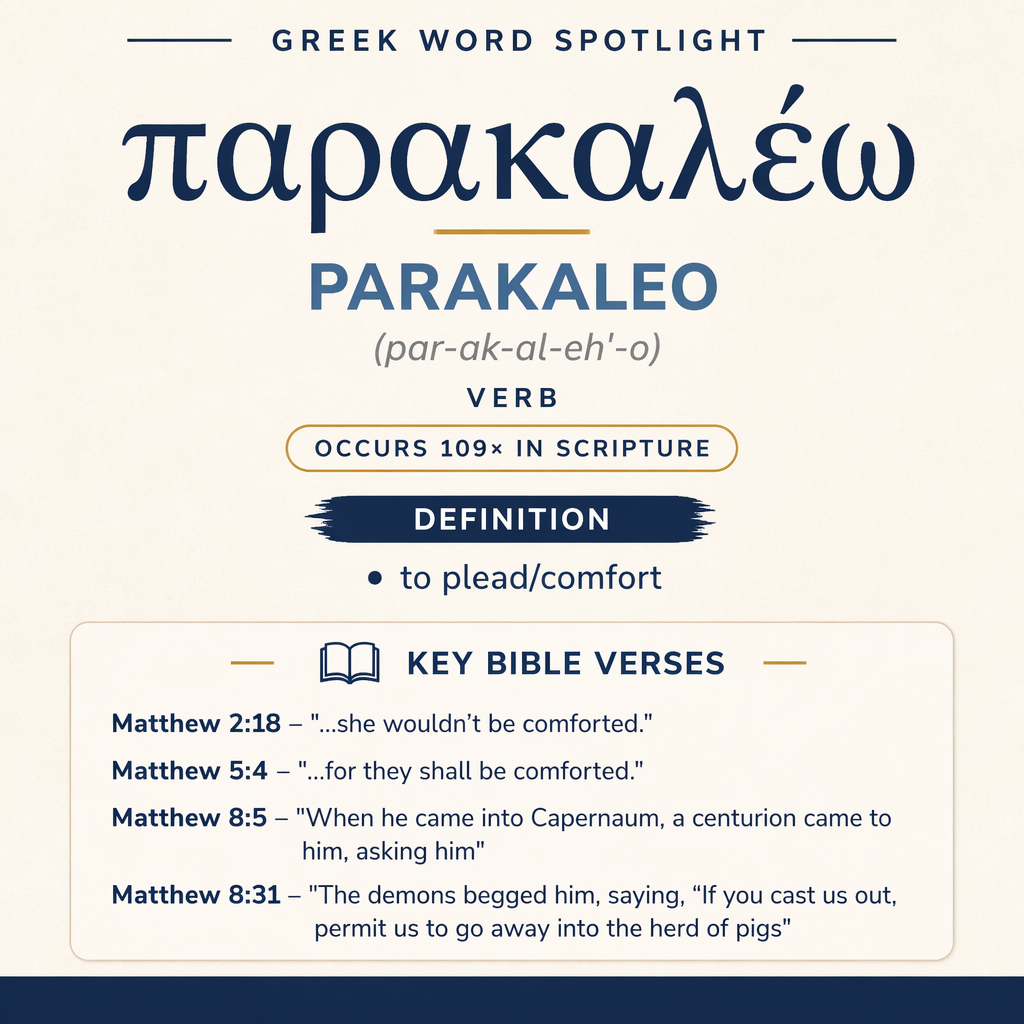
παρακαλέω means “to plead/comfort” and appears 109 times in Scripture, including in Matthew 2:18; 5:4; 8:5, 31, 34; 14:36; 18:29, 32.
Core Meaning
παρακαλέω is defined as “to plead/comfort.” In the listed verses, it appears in contexts of both begging and being comforted.
Learn More →Matthew Examples
In Matthew 8:31 and 8:34, the word is used for begging (“The demons begged him,” and the city “begged” him to depart). In Matthew 5:4, it is tied to comfort: “they shall be comforted.”
Learn More →Scripture Frequency
παρακαλέω occurs 109 times in Scripture. The sample references include Matthew 2:18; 14:36; and 18:29, 32.
Learn More →παρακαλέω expresses a movement toward another person with speech that pleads or brings comfort. In the passages cited here, it ranges from grief that seeks consolation to urgent requests made to Jesus, and even to pleas from demons and debtors.
Occurrences
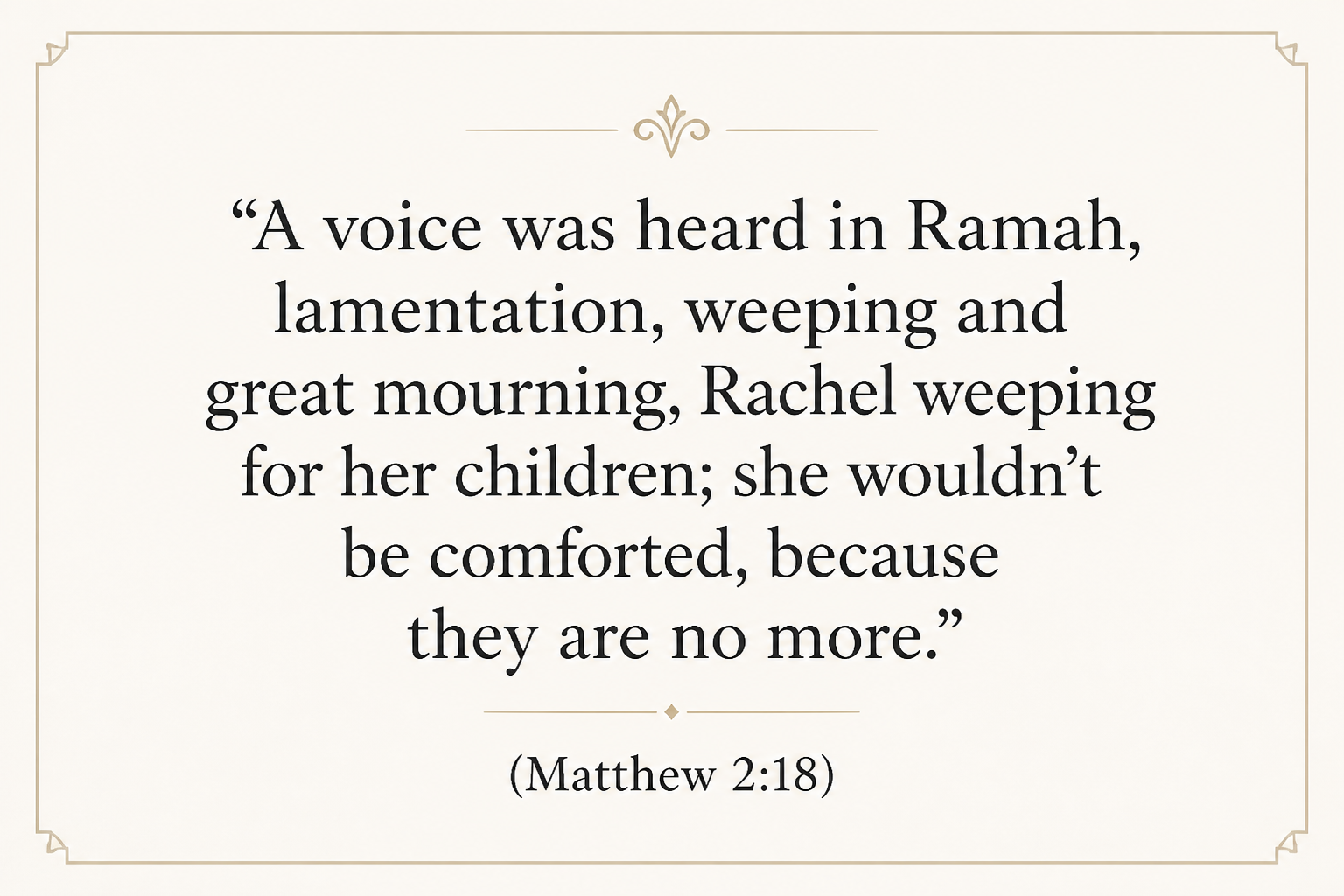
“A voice was heard in Ramah, lamentation, weeping and great mourning, Rachel weeping for her children; she wouldn’t be comforted, because they are no more.” (Matthew 2:18)
Here παρακαλέω is framed by layered sorrow—“lamentation, weeping and great mourning.” The action is not performed but refused: the mourner “wouldn’t be comforted.” The word therefore sits in the space where comfort might be offered but cannot be received, because the loss (“they are no more”) is felt as final and irreparable in the moment described.
Blessed are those who mourn, for they shall be comforted. (Matthew 5:4)
In this beatitude, παρακαλέω points to comfort as a promised answer to mourning. The saying sets grief (“those who mourn”) and consolation (“they shall be comforted”) in direct relation, treating comfort as the fitting counterpart to sorrow. The word’s force is forward-looking: it holds out consolation as the outcome for people presently characterized by mourning.
When he came into Capernaum, a centurion came to him, asking him, (Matthew 8:5)
Here παρακαλέω appears as the centurion’s approach to Jesus in the posture of request: he “came to him, asking him.” The word contributes the sense of an appeal directed to a person believed able to act. The scene is defined by proximity (“came to him”) and address (“asking”), presenting the centurion’s speech as more than casual inquiry—an intentional petition.
The demons begged him, saying, “If you cast us out, permit us to go away into the herd of pigs.” (Matthew 8:31)
παρακαλέω here expresses pleading under constraint. The demons’ request is conditional—“If you cast us out”—and specific—“permit us to go away into the herd of pigs.” The word marks their attempt to secure a particular outcome from Jesus in a situation where they do not set the terms, so their speech takes the form of a begged permission.
Behold, all the city came out to meet Jesus. When they saw him, they begged that he would depart from their borders. (Matthew 8:34)
In this public response, παρακαλέω conveys a collective plea. “All the city” acts as one body: they “came out to meet” Jesus and then “begged that he would depart.” The word carries the weight of urgency and insistence, but in the direction of removal rather than aid. It highlights that pleading can seek distance as well as help.
and they begged him that they might just touch the fringe of his garment. As many as touched it were made whole. (Matthew 14:36)
παρακαλέω here introduces a restrained request: “that they might just touch the fringe of his garment.” The word captures their dependence on Jesus’ consent and nearness, even for something as minimal as a touch. The narrative then places the plea alongside its result—“As many as touched it were made whole”—so the begging frames a hopeful appeal that anticipates restoration.
“So his fellow servant fell down at his feet and begged him, saying, ‘Have patience with me, and I will repay you!’” (Matthew 18:29)
In this scene of debt, παρακαλέω is embodied in posture and speech. The fellow servant “fell down at his feet,” then “begged,” and his words ask for time: “Have patience with me.” The word highlights the vulnerability of someone seeking mercy from an equal within the story’s social world, and it shows pleading as an attempt to avert immediate penalty by promising future repayment.
Then his lord called him in, and said to him, ‘You wicked servant! I forgave you all that debt, because you begged me. (Matthew 18:32)
Here παρακαλέω is recalled as the reason forgiveness was extended: “I forgave you all that debt, because you begged me.” The word functions as the stated basis for a decisive act of leniency. By placing the begging in the past and tying it to “forgave,” the verse uses παρακαλέω to spotlight how pleading can move an authority figure to cancel a burden entirely.
Or do you think that I couldn’t ask my Father, and he would even now send me more than twelve legions of angels? (Matthew 26:53)
In this statement, παρακαλέω appears as a hypothetical appeal Jesus could make: “ask my Father.” The word contributes the idea of requesting assistance from one who has the power to provide it, and the scale of what could be given—“more than twelve legions of angels”—amplifies the seriousness of the request. The verse uses the possibility of asking to underline that aid is available by appeal, even if not taken.
A leper came to him, begging him, kneeling down to him, and saying to him, “If you want to, you can make me clean.” (Mark 1:40)
Here παρακαλέω is joined to physical gestures: “begging him, kneeling down to him.” The leper’s words combine confidence in Jesus’ ability (“you can make me clean”) with deference to Jesus’ will (“If you want to”). The word marks the appeal as earnest and personal, rooted in need and expressed with humility.
He begged him much that he would not send them away out of the country. (Mark 5:10)
In this request, παρακαλέω is intensified: “begged him much.” The content of the plea is protective—“that he would not send them away out of the country.” The word portrays repeated or forceful entreaty aimed at avoiding displacement. It also keeps the focus on Jesus as the one whose decision determines their fate.
All the demons begged him, saying, “Send us into the pigs, that we may enter into them.” (Mark 5:12)
Again παρακαλέω voices a corporate plea—“All the demons begged him”—and again the request is concrete and directional: “Send us into the pigs.” The verb frames their speech as an attempt to gain permission for a particular relocation (“that we may enter into them”), presenting their desire as dependent upon Jesus’ authorization.

Sense and Usage
Across these texts, παρακαλέω operates in two closely connected arenas: comfort in the face of grief, and pleading in the face of need or constraint. In Matthew 2:18 and Matthew 5:4, the word belongs to mourning and consolation. One passage depicts comfort refused—sorrow so deep that consolation does not take hold—while the other depicts comfort assured, held out as the answering gift to mourners. Together they show that comfort is not merely a feeling but a relational act that may be withheld by circumstance or promised as future relief.
In the remaining occurrences, the dominant shape is entreaty directed toward someone regarded as having the authority or ability to respond. The centurion “asking” (Matthew 8:5), the city “begged that he would depart” (Matthew 8:34), and the sick “begged him” for even the slightest contact (Matthew 14:36) show how varied the aims of pleading can be: assistance, distance, permission, patience, cleansing. The word is flexible enough to cover requests that seek healing and restoration (Matthew 14:36; Mark 1:40) as well as requests that seek avoidance or removal (Matthew 8:34; Mark 5:10).
The passages involving demons (Matthew 8:31; Mark 5:12) emphasize pleading as negotiation under superior power. Their speech is not an equal exchange but an urgent appeal for terms—“permit us,” “send us”—made to the one who can “cast us out.” The debt scenes (Matthew 18:29, 32) place pleading in an economic and moral setting: the begged-for patience becomes the ground for forgiveness, and the remembered begging becomes part of the lord’s indictment. In Matthew 26:53, the verb’s pleading sense is set within a relationship of petition—“ask my Father”—and the imagined response (“send me more than twelve legions of angels”) illustrates the magnitude that a request could draw forth.
Imagery
The word’s imagery in these passages is often bodily and spatial: someone comes near, falls down, kneels, meets, touches a garment’s fringe, or begs for departure “from their borders.” Even when comfort is the focus, it is pictured as something that can be received or refused amid audible grief—“a voice was heard… weeping and great mourning” (Matthew 2:18). Whether as consolation for mourners or as urgent appeals to Jesus, παρακαλέω repeatedly places one party in need and another in the position to answer that need with a response that changes the situation.
Sources: Lexical data from Strong’s Exhaustive Concordance and the Translators Brief Lexicon of Extended Strongs for Greek (STEPBible, CC BY). Occurrence data from the Translators Amalgamated Greek New Testament (STEPBible, CC BY). Scripture quotations from the World English Bible (public domain).