Exploring the Meaning of Pandocheion in Greek
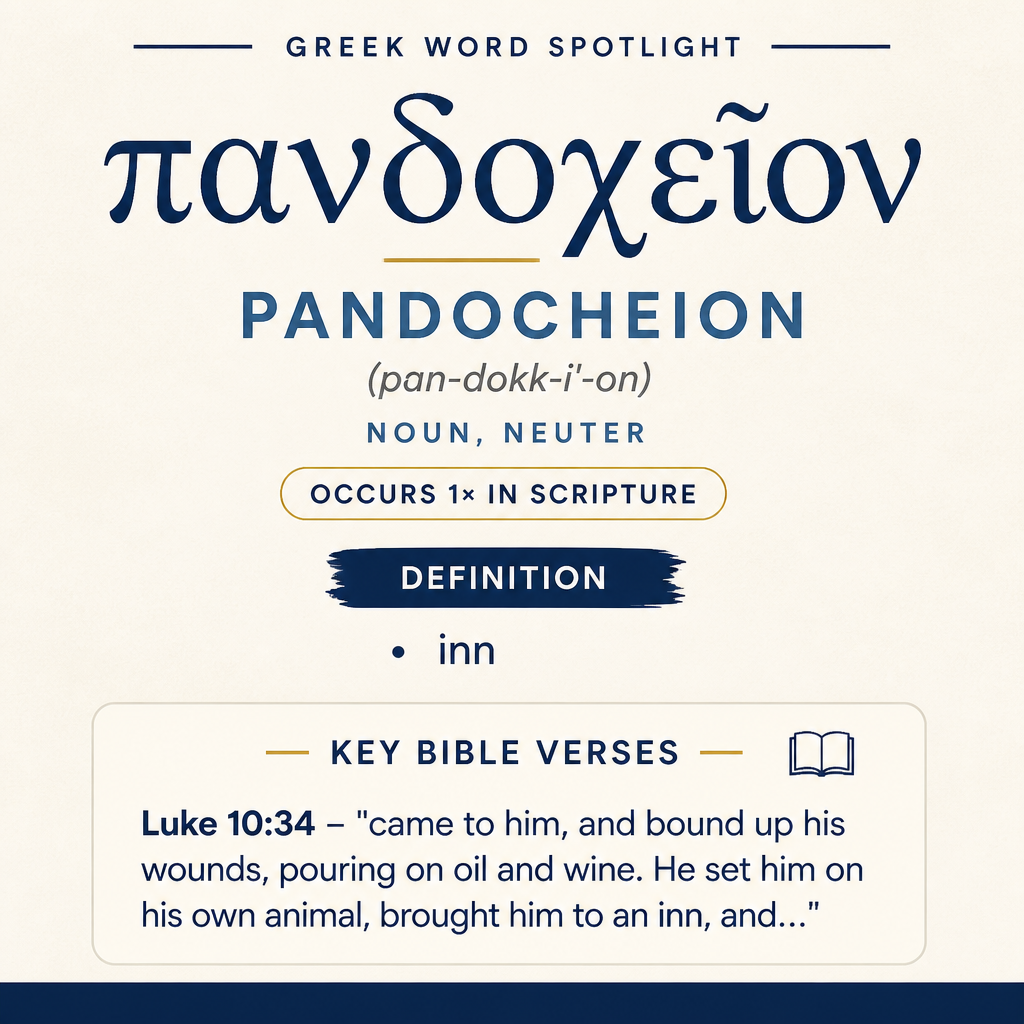
πανδοχεῖον means “inn” and appears once in Scripture, in Luke 10:34.
Verse Context
In Luke 10:34, the wounded man is brought to an inn. The verse mentions oil and wine being poured on his wounds.
Learn More →πανδοχεῖον means “inn” and appears in the account of the wounded traveler being brought to lodging for care. Its single New Testament occurrence stands within a tightly narrated sequence of hands-on mercy, transport, and continued attention.
Root and Related Words
πανδοχεῖον is linked with πᾶς (pas), “all” (Strong’s G3956), and δέχομαι (dechomai), “to receive” (Strong’s G1209). These related words frame the term’s idea of a place characterized by receiving, expressed with an “all” element and the action of receiving.
Occurrences
“came to him, and bound up his wounds, pouring on oil and wine. He set him on his own animal, brought him to an inn, and took care of him.” (Luke 10:34)
Here πανδοχεῖον names the destination to which the injured man is brought after immediate first aid. The narrative moves in a practical sequence: the helper “came to him,” “bound up his wounds,” and treated them with “oil and wine.” The injured person is then lifted onto the helper’s “own animal,” which signals a transfer from danger and exposure into a safer setting. Against that progression, “brought him to an inn” functions as the turning point from roadside emergency measures to sustained care in a settled place.
Within the same sentence, the inn is paired with the continuing action, “and took care of him.” The lodging is not presented as an end in itself, but as the setting that makes ongoing care possible. The helper does not merely relocate the man; he remains with him to provide attention. πανδοχεῖον therefore contributes a concrete, situational detail: it is the place where care can continue beyond what can be done “on the road.” It belongs to the story’s realism—wounds require binding, transport requires an animal, and extended care is anchored in a place prepared to receive a traveler.
Sense and Usage
The definition “inn” fits the passage because the term marks a recognized kind of lodging suitable for receiving a person in need of shelter and supervision. In Luke 10:34, the inn is neither described architecturally nor emotionally; its meaning is carried by function in the narrative. It is the place to which someone can be “brought,” implying accessibility and the possibility of admission, and it is the environment in which someone can be “taken care of,” implying that remaining there is a workable way to provide continued help.
The surrounding verbs give the word its practical contours. First, the inn stands after “He set him on his own animal,” so it is the reachable goal of a short journey rather than a distant abstraction. Second, it stands before “and took care of him,” so it is not merely a bed for the night but a context for attentive action. The narrative does not shift responsibility away from the helper onto the building; instead, the helper’s care continues in and through the inn’s shelter. The inn is thus a location that supports care by offering a stable place to stay, in contrast to the road where only immediate interventions are possible.
Because πανδοχεῖον occurs here in the midst of a chain of compassionate actions, it also helps pace the story. The reader moves from first contact (“came to him”) to treatment (“bound up his wounds”) to medical application (“pouring on oil and wine”) to transport (“set him on his own animal”) to arrival (“brought him to an inn”) to continued attention (“took care of him”). The word “inn” anchors the arrival step. Without it, the sequence would lack a named place where the travel ends and the caregiving can become sustained. The term therefore contributes a sense of completion to the rescue: the wounded man is not left at the roadside, and he is not merely carried partway; he is brought into lodging.
The related words πᾶς (“all”) and δέχομαι (“to receive”) sharpen this functional reading by associating the term with reception. In Luke 10:34, the injured man is received into a place where care can proceed, matching the narrative’s emphasis on taking responsibility for another person’s well-being. Even though the text does not describe the innkeeper or the inn’s services, the inn’s narrative role is clear: it is a place intended for receiving someone who arrives needing shelter and attention.
Imagery
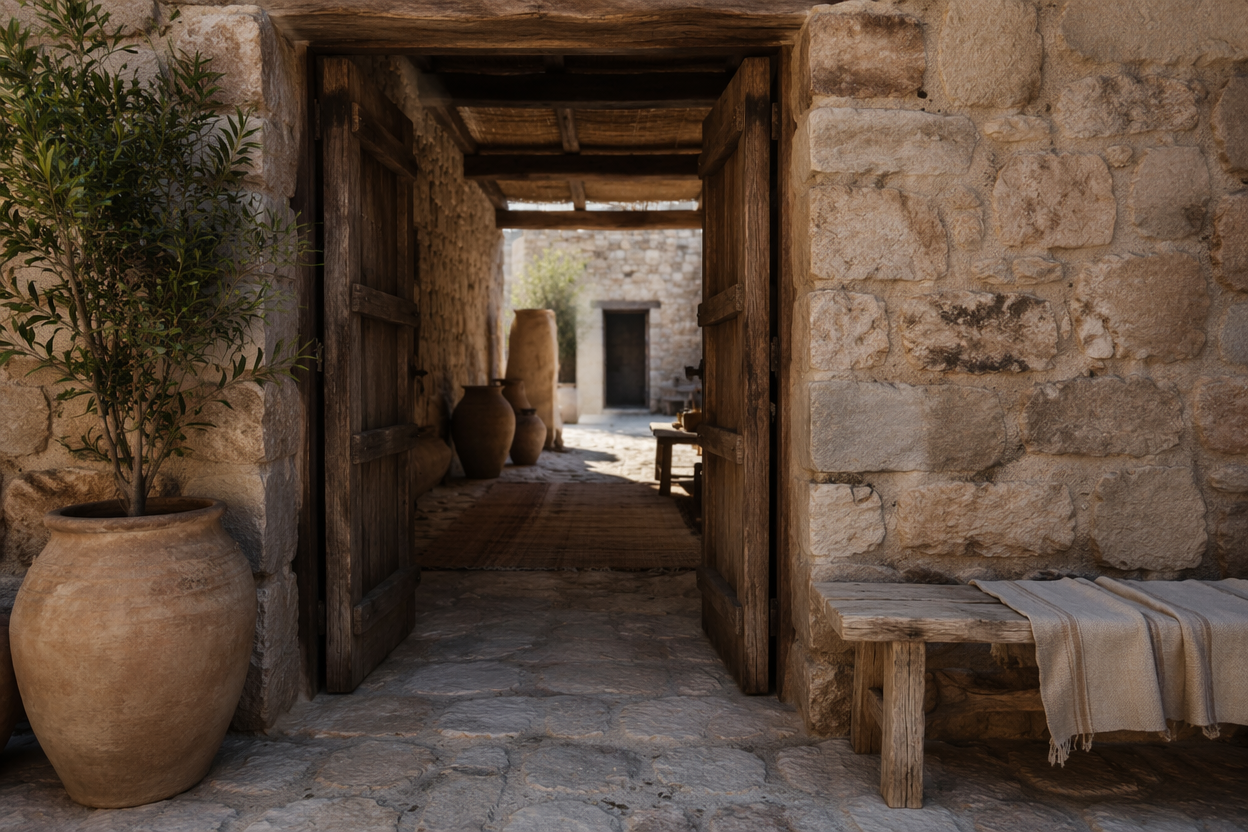
Luke 10:34 places πανδοχεῖον at the end of a short journey from injury toward safety: wounds are bound, treatment is applied, the injured man is set on an animal, and then he is brought to lodging. The word carries the simple imagery of arrival at a place where one can stop traveling and be cared for—an ordinary building that becomes the setting for continued mercy in a moment of need.
Sources: Lexical data from Strong’s Exhaustive Concordance and the Translators Brief Lexicon of Extended Strongs for Greek (STEPBible, CC BY). Occurrence data from the Translators Amalgamated Greek New Testament (STEPBible, CC BY). Scripture quotations from the World English Bible (public domain).