
Exploring the Meaning of Megaloprepes in Greek
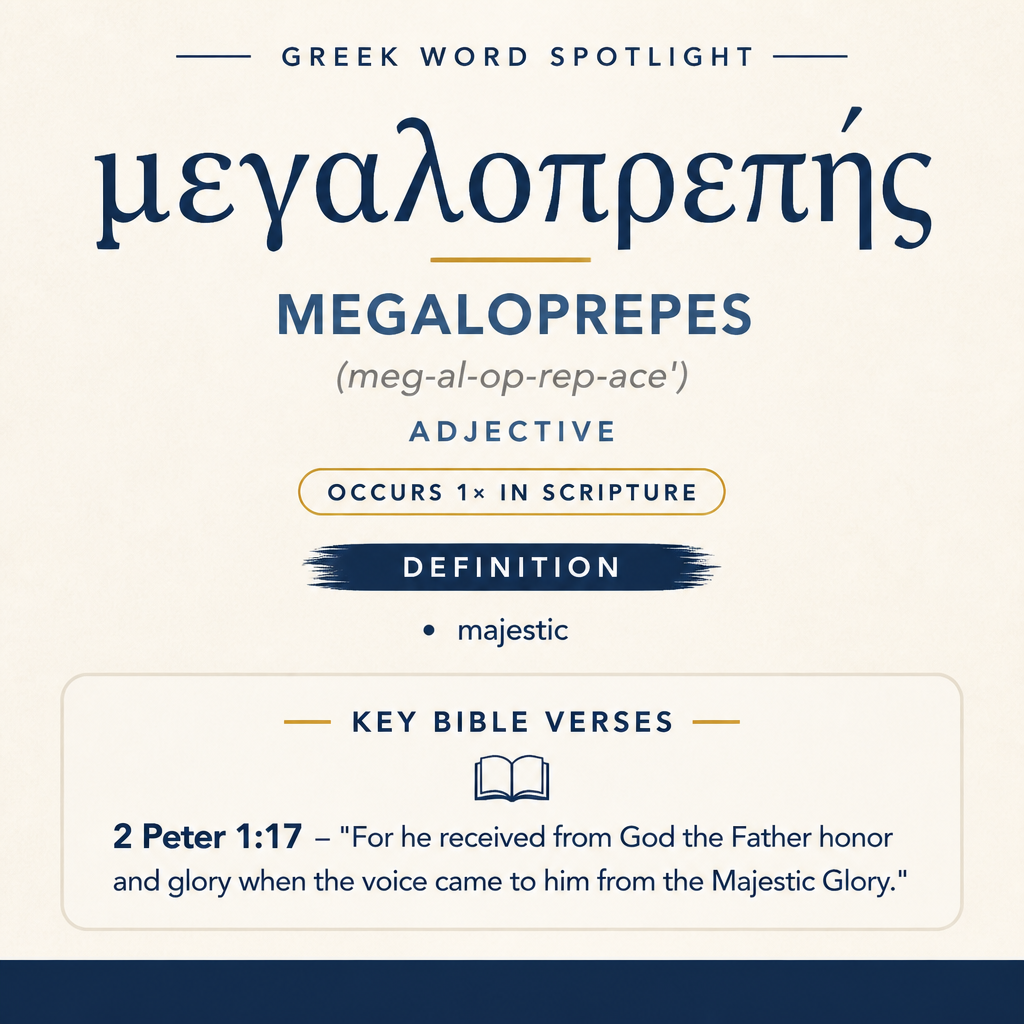
μεγαλοπρεπής means “majestic” and appears once in Scripture, in 2 Peter 1:17.
Biblical Occurrence
This word occurs one time in Scripture. Its only reference is 2 Peter 1:17.
Learn More →Verse Context
In 2 Peter 1:17, it appears in the phrase “the Majestic Glory.” The verse describes honor and glory received from God the Father when a voice came.
Learn More →μεγαλοπρεπής describes what is majestic, and it appears once in the New Testament, in 2 Peter 1:17. There it is tied to divine glory and to the heavenly voice that declares the Son’s identity and the Father’s pleasure.
Root and Related Words
μεγαλοπρεπής is connected with μέγας (megas), “great” (Strong’s G3173), and πρέπω (prepo), “be proper” (Strong’s G4241). Together these related words place μεγαλοπρεπής in the orbit of greatness and what is fitting or becoming.

Occurrences
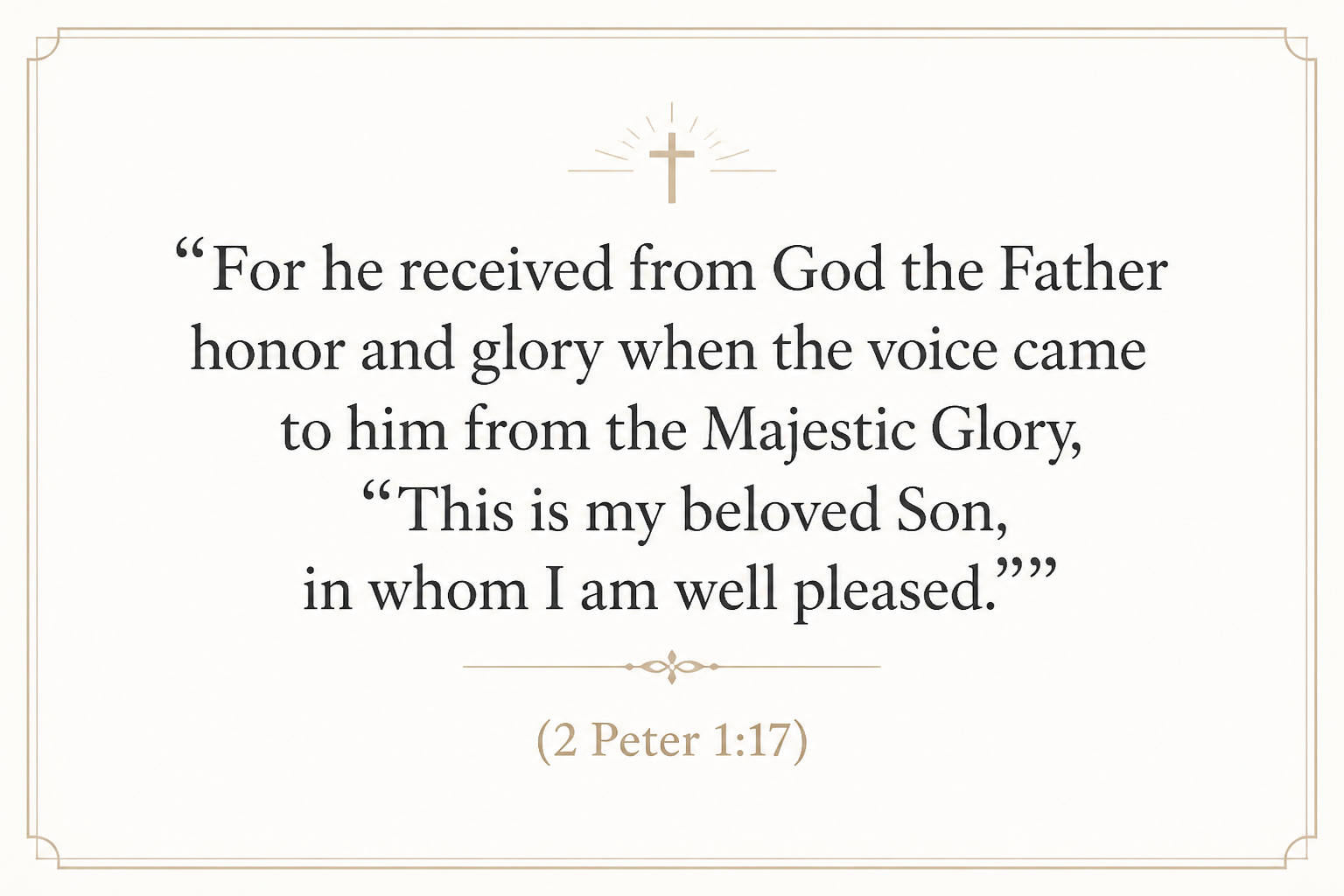
“For he received from God the Father honor and glory when the voice came to him from the Majestic Glory, “This is my beloved Son, in whom I am well pleased.”” (2 Peter 1:17)
In this sentence, μεγαλοπρεπής is embedded in the expression “the Majestic Glory.” The immediate setting is a recollection of an event in which “he received from God the Father honor and glory,” and the word helps frame the source of the voice as belonging to the realm of glory described in elevated terms. The voice is not presented as arising from the disciples’ reflection or from the surrounding circumstances, but as something that “came to him,” carrying a declaration about the Son: “This is my beloved Son, in whom I am well pleased.” Within this narration, calling the glory “Majestic” underscores the weightiness of the scene—honor and glory are received, and the divine endorsement is spoken from that sphere of glory.
The grammar of the clause also gives the adjective a particular function: it does not directly modify the “voice,” but the “Glory” from which the voice comes. This locates majesty not merely in the content of the words spoken but in the origin and setting of the speaking. The Father is explicitly named (“God the Father”), and the scene is characterized by “honor and glory”; “Majestic Glory” gathers those elements into a single descriptive phrase that marks the voice as coming from the highest, most exalted context the author can name within the sentence.
Sense and Usage
Because μεγαλοπρεπής is used only here, its contribution is focused and concentrated: it characterizes “Glory” as majestic in a moment where divine communication validates the Son. The adjective functions as an intensifier of the surrounding themes—“honor,” “glory,” and the authoritative voice—without changing the subject matter of the declaration itself. The statement “This is my beloved Son” is straightforward, but the description of its source as “the Majestic Glory” shapes how the statement is to be heard: not as a private affirmation or a merely human estimation, but as a word issuing from a glory befitting God’s own presence and prerogative.
In this context, “majestic” is not presented as an aesthetic quality detached from action; it is tied to a concrete act of conferral and speech. The Son “received…honor and glory,” and the voice “came to him.” Majesty, as expressed by μεγαλοπρεπής, accompanies revelation and recognition. The adjective also works in tandem with the relational and evaluative language of the voice: “beloved Son” and “well pleased.” The majesty of the glory is thus aligned with personal address and approval, bringing together grandeur (“Majestic Glory”) and intimacy (“my beloved Son”) within one scene.
Finally, μεγαλοπρεπής helps the author place the experience under the category of divine testimony. The focus is not on spectacle described in detail, but on the authority of what was heard and from where it was heard. By pointing to the “Majestic Glory” as the origin of the voice, the word supports the claim that what was received—“honor and glory”—is anchored in God’s own majestic sphere, and that the proclamation about the Son carries the gravity appropriate to that origin.
Imagery
The phrase “the Majestic Glory” evokes a setting of radiant, weighty splendor from which a voice issues. In 2 Peter 1:17 the imagery is restrained but concentrated: honor and glory are received, and the decisive element is a voice that comes from glory characterized as majestic, surrounding the declaration of the beloved Son with the atmosphere of divine grandeur.
Sources: Lexical data from Strong’s Exhaustive Concordance and the Translators Brief Lexicon of Extended Strongs for Greek (STEPBible, CC BY). Occurrence data from the Translators Amalgamated Greek New Testament (STEPBible, CC BY). Scripture quotations from the World English Bible (public domain).




