
Understanding the Significance of Askos in Greek
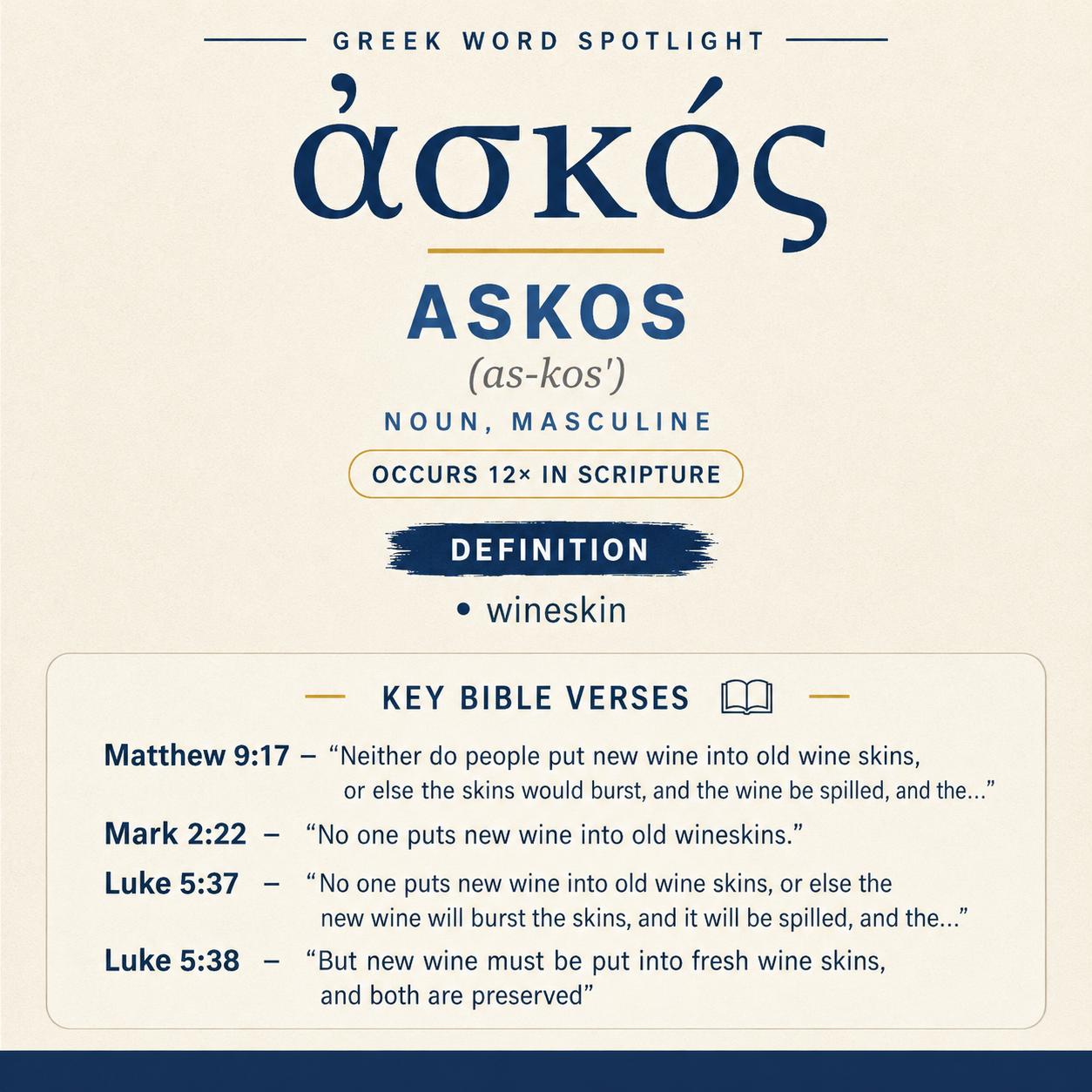
ἀσκός (Askos) means “wineskin,” appearing 12 times in Scripture, including Matthew 9:17; Mark 2:22; and Luke 5:37–38.
Gospel Occurrences
It appears in Matthew 9:17, Mark 2:22, and Luke 5:37–38. In these verses, it is used in teaching about wine being placed into wineskins.
Learn More →Verse Imagery
The cited passages contrast old wineskins that burst with fresh wineskins that preserve both wine and skins. This imagery is tied to “new wine” and the condition of the wineskins.
Learn More →ἀσκός refers to a wineskin, appearing in Jesus’ illustration about what happens when “new wine” is placed into “old” versus “fresh” wine skins. In these sayings, the wineskin is the container whose condition determines whether the wine is preserved or lost.
Occurrences
“Neither do people put new wine into old wine skins, or else the skins would burst, and the wine be spilled, and the skins ruined. No, they put new wine into fresh wine skins, and both are preserved.” (Matthew 9:17)
Here ἀσκός is central to a comparison framed in everyday practice: people do not put “new wine” into “old wine skins.” The old skins are portrayed as unable to withstand what the new wine will do to them—“the skins would burst”—resulting in a double loss: “the wine be spilled” and “the skins ruined.” The word therefore carries more than the idea of a container in the abstract; it evokes a particular kind of container that can fail, rupture, and be rendered unusable. The second sentence turns the same noun into a positive image: “fresh wine skins” are where new wine belongs, with the result that “both are preserved.” In this setting, the wineskin is paired with the wine in a shared outcome: the right container keeps the contents safe and remains intact itself.
“No one puts new wine into old wineskins, or else the new wine will burst the skins, and the wine pours out, and the skins will be destroyed; but they put new wine into fresh wineskins.” (Mark 2:22)
Mark’s wording stresses the chain reaction that follows the mismatch between “new wine” and “old wineskins.” ἀσκός marks the vulnerable point in the process: the new wine “will burst the skins,” and once the skins rupture, “the wine pours out.” The final clause—“the skins will be destroyed”—keeps attention on the wineskin as a real, finite object with a life cycle: it can be “old,” and in that state it can be brought to an end by the pressure associated with new wine. The closing contrast (“but they put new wine into fresh wineskins”) uses the same term to imply suitability and durability: the appropriate wineskin is one described as “fresh,” and that freshness is presented as the practical solution.
“No one puts new wine into old wine skins, or else the new wine will burst the skins, and it will be spilled, and the skins will be destroyed.” (Luke 5:37)
Luke presents ἀσκός within a negative example stated as an absolute (“No one puts…”). The sentence again links the condition of the wineskin to the fate of the wine: if the wineskin is “old,” the result is rupture (“will burst the skins”) followed by loss (“it will be spilled”) and then the finality of damage (“the skins will be destroyed”). The movement from bursting to spilling shows the wineskin’s function in the scene: it is the barrier that keeps the wine contained, and when that barrier fails the contents do not merely diminish but are wasted. The repeated emphasis on destruction portrays the wineskin as something intended to remain whole; its breaking is not incidental but the decisive failure that the illustration warns against.
“But new wine must be put into fresh wine skins, and both are preserved.” (Luke 5:38)
This line supplies the positive counterpart in concentrated form. ἀσκός appears with the necessity of proper placement: “new wine must be put into fresh wine skins.” The verb “must” makes the wineskin-choice the decisive requirement for preservation, not a minor preference. The outcome, “both are preserved,” binds container and contents together again: the wineskin is not disposable in this saying but part of what is saved. Luke’s phrasing also highlights the wineskin as the practical means by which preservation occurs; the “fresh” wineskin is the condition that allows the new wine to remain safely stored.
Sense and Usage
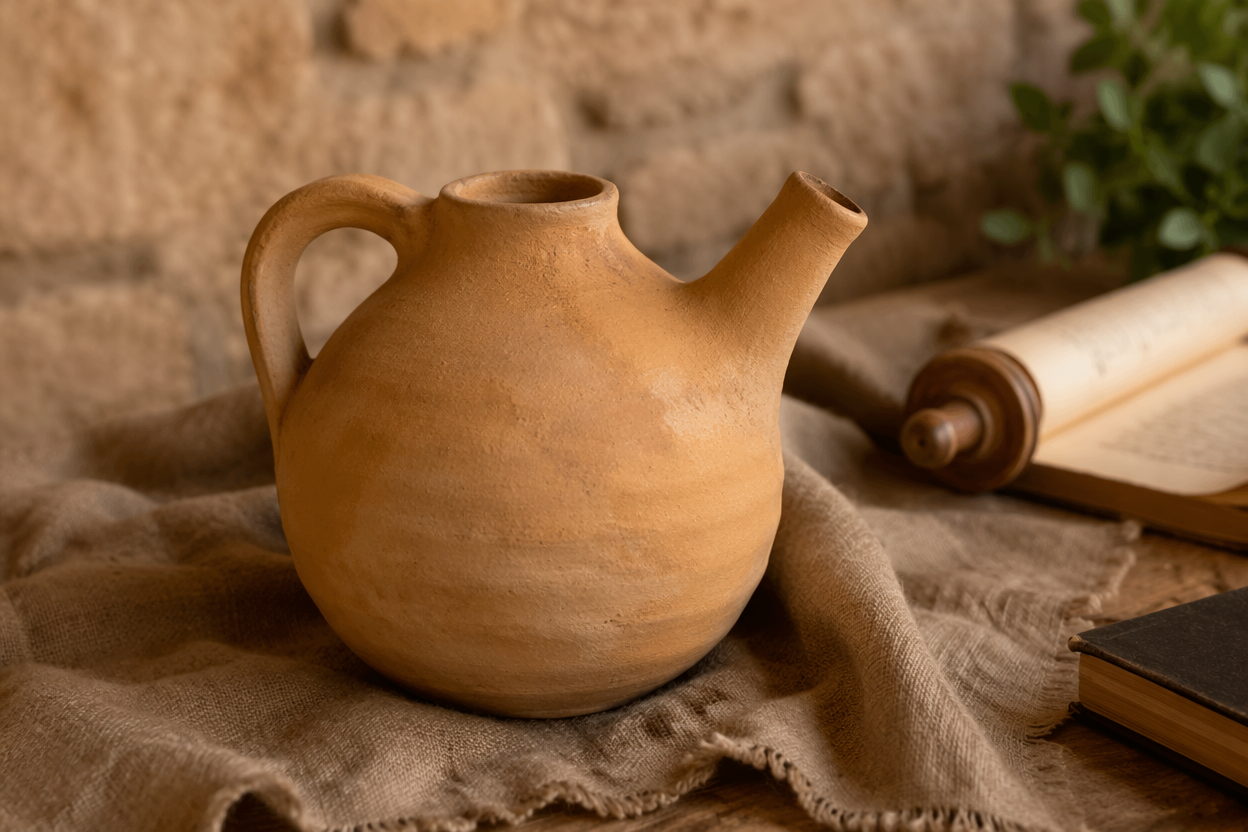
Across these sayings, ἀσκός functions as a concrete household item, and its defining feature is not merely that it can hold wine but that it can be described by its state—“old” or “fresh”—with consequences that follow. When the wineskin is “old,” the imagery consistently moves toward rupture (“burst”) and loss (“spilled,” “pours out”), culminating in the wineskin’s being “ruined” or “destroyed.” The noun therefore carries an implicit contrast between a container that can still do its job and one that can no longer safely bear what is put into it.
The pairings in the sentences shape how ἀσκός is heard. First, it is paired with “new wine,” and the tension between “new” and “old” is presented as a mismatch with predictable results. Second, it is paired with verbs of preservation and destruction: wineskins can be “ruined,” “destroyed,” or “preserved.” That verbal environment places weight on the wineskin as something whose integrity matters, not only for the wine’s sake but in its own right (“both are preserved”). Third, ἀσκός is modified by adjectives that indicate condition (“old,” “fresh”), which makes the noun a vehicle for a simple but forceful logic: the same kind of item can be either fit or unfit depending on its state.
The repeated sequence—placing wine, bursting skins, spilling/pouring out, and destruction—frames the wineskin as the critical point of failure. The wine is valuable and vulnerable, but the text’s imagery turns on the container: it is the wineskin that breaks, and its breaking is what makes the wine’s loss inevitable. Conversely, the “fresh” wineskin prevents the entire chain of loss; it allows a different ending, where preservation replaces waste. Within the sayings, then, ἀσκός does rhetorical work as a vivid, tangible object whose physical condition explains an outcome without needing further argument.
Imagery
The imagery tied to ἀσκός in these verses is strikingly material: an old wineskin “burst[s],” wine is “spilled” or “pours out,” and the skin itself is “ruined” or “destroyed.” The picture is of preventable loss caused by putting something new into a container not suited to it. When the wineskin is “fresh,” the scene reverses—nothing bursts, nothing spills, and “both are preserved”—so the wineskin becomes a quiet image of safe containment and kept value.
Sources: Lexical data from Strong’s Exhaustive Concordance and the Translators Brief Lexicon of Extended Strongs for Greek (STEPBible, CC BY). Occurrence data from the Translators Amalgamated Greek New Testament (STEPBible, CC BY). Scripture quotations from the World English Bible (public domain).





