Exploring the Meaning of Arotrioo in Greek
ἀροτριάω means “to plow” and occurs three times in Scripture, including Luke 17:7 and 1 Corinthians 9:10.
Gospel Context
In Luke 17:7 it appears in a scene describing a servant plowing or keeping sheep.
Learn More →Pauline Context
In 1 Corinthians 9:10 it is used in the statement that the one who plows ought to plow in hope.
Learn More →ἀροτριάω means “to plow,” using the concrete work of turning soil as a recognizable image for ordinary labor. It appears in Jesus’ brief domestic-field illustration (Luke 17:7) and in Paul’s argument about labor and expectation (1 Corinthians 9:10).

Root and Related Words
ἀροτριάω is related to arotron (ἄροτρον), “plow” (Strong’s G723), the implement associated with the work named by the verb.

Occurrences
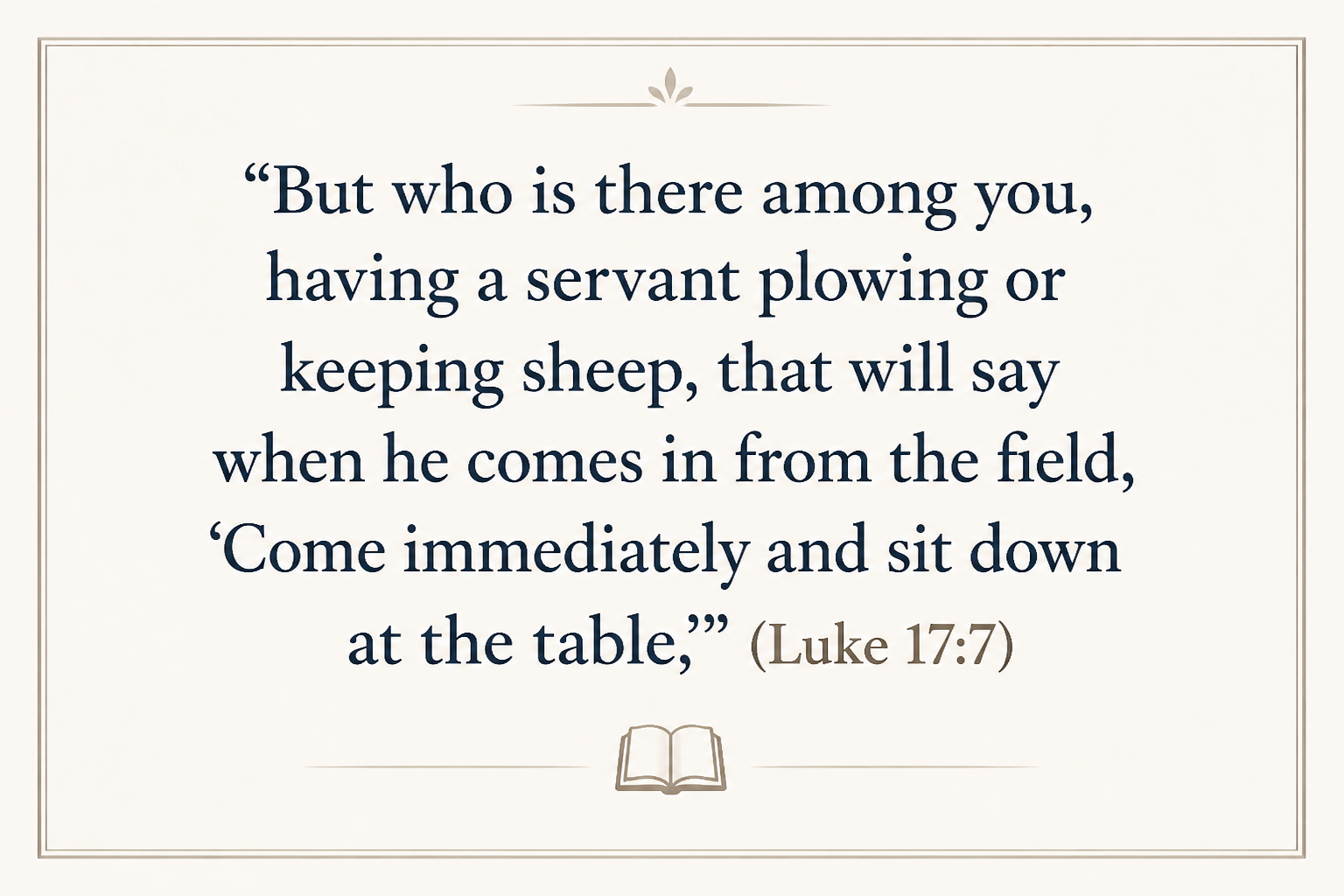
“But who is there among you, having a servant plowing or keeping sheep, that will say when he comes in from the field, ‘Come immediately and sit down at the table,’” (Luke 17:7)
Here ἀροτριάω stands alongside “keeping sheep” as one of the ordinary tasks a servant may be doing “in the field.” The verb points to the kind of work that leaves a person outside until the job is finished: it is not presented as a momentary action but as a piece of service that occupies the servant’s time and strength before he “comes in from the field.” In the sentence’s logic, “plowing” functions as the kind of labor after which immediate rest and privilege (“sit down at the table”) would be unexpected in this household setting. The word therefore supplies a vivid, familiar example of routine, physically grounded work that belongs to the servant’s role in the story-world Jesus sketches.
“or does he say it assuredly for our sake? Yes, it was written for our sake, because he who plows ought to plow in hope, and he who threshes in hope should partake of his hope.” (1 Corinthians 9:10)
In Paul’s sentence ἀροτριάω is paired with “threshes,” placing “plowing” at the front end of agricultural labor and linking it to a disposition: “in hope.” The verb is used twice (“he who plows” / “ought to plow”), first to identify the worker by his activity and then to describe what that activity should be accompanied by. The repetition tightens the connection between the act and the expectation attached to it; the plower’s work is not imagined as aimless, but as labor undertaken with an eye toward an outcome. Within the immediate wording, “hope” is not defined as a different action but as the posture that belongs with the work, and “should partake of his hope” sets the plowing alongside the idea of sharing in what one expects from the labor. The verb thus carries the weight of a common-sense pattern: a person who does the hard, initiating work of the field properly does it expecting a corresponding benefit.
Sense and Usage
Across these two settings, “to plow” functions as a stable, concrete image drawn from agricultural life. In Luke 17:7 it is presented as servant work that happens “in the field,” the kind of duty that precedes coming indoors and does not automatically entitle the worker to immediate honor at the table. The force of the word in that scene lies in its plainness: plowing is the sort of task hearers can picture without explanation, and precisely because it is recognizable as necessary labor, it supports the illustration’s social logic about what is and is not expected upon returning from work.
In 1 Corinthians 9:10 the same action is used to make a point about how labor is ordinarily undertaken. By casting the worker as “he who plows” and then stating that he “ought to plow in hope,” Paul treats the act as representative of purposeful work. The verb therefore supplies an anchor for the argument’s practicality: plowing is not a decorative metaphor but a type of work whose demands and aims are intuitive. Its pairing with “threshes” keeps the picture within the cycle of fieldwork, but ἀροτριάω itself points particularly to the labor that begins the process—work that must be done before any later step can occur, and which naturally involves expectation about what the field will yield after effort is invested.
Both passages also show ἀροτριάω carrying social and moral implications without changing its basic sense. In Luke, the plower is framed by his status (“a servant”) and location (“from the field”), so the word’s contribution is to locate the servant in real work that explains why his return does not overturn household expectations. In 1 Corinthians, the plower is framed by what “ought” to accompany the work (“in hope”), so the word’s contribution is to ground an “ought” statement in the ordinary logic of labor: people do not typically undertake demanding work without anticipation of some share in the outcome.
Imagery
The imagery carried by ἀροτριάω in these verses is tactile and earthy: a person engaged in field labor, working before coming in, and working with an outlook toward what follows the work. Luke 17:7 emphasizes the servant’s place and the sequence of duties—plowing is part of what happens “in the field” before the household meal. 1 Corinthians 9:10 emphasizes the worker’s mindset—plowing is the kind of effort that is fittingly done “in hope,” with the expectation that the labor relates to eventual participation in what is hoped for.
Sources: Lexical data from Strong’s Exhaustive Concordance and the Translators Brief Lexicon of Extended Strongs for Greek (STEPBible, CC BY). Occurrence data from the Translators Amalgamated Greek New Testament (STEPBible, CC BY). Scripture quotations from the World English Bible (public domain).