Understanding the Significance of Halon in Greek
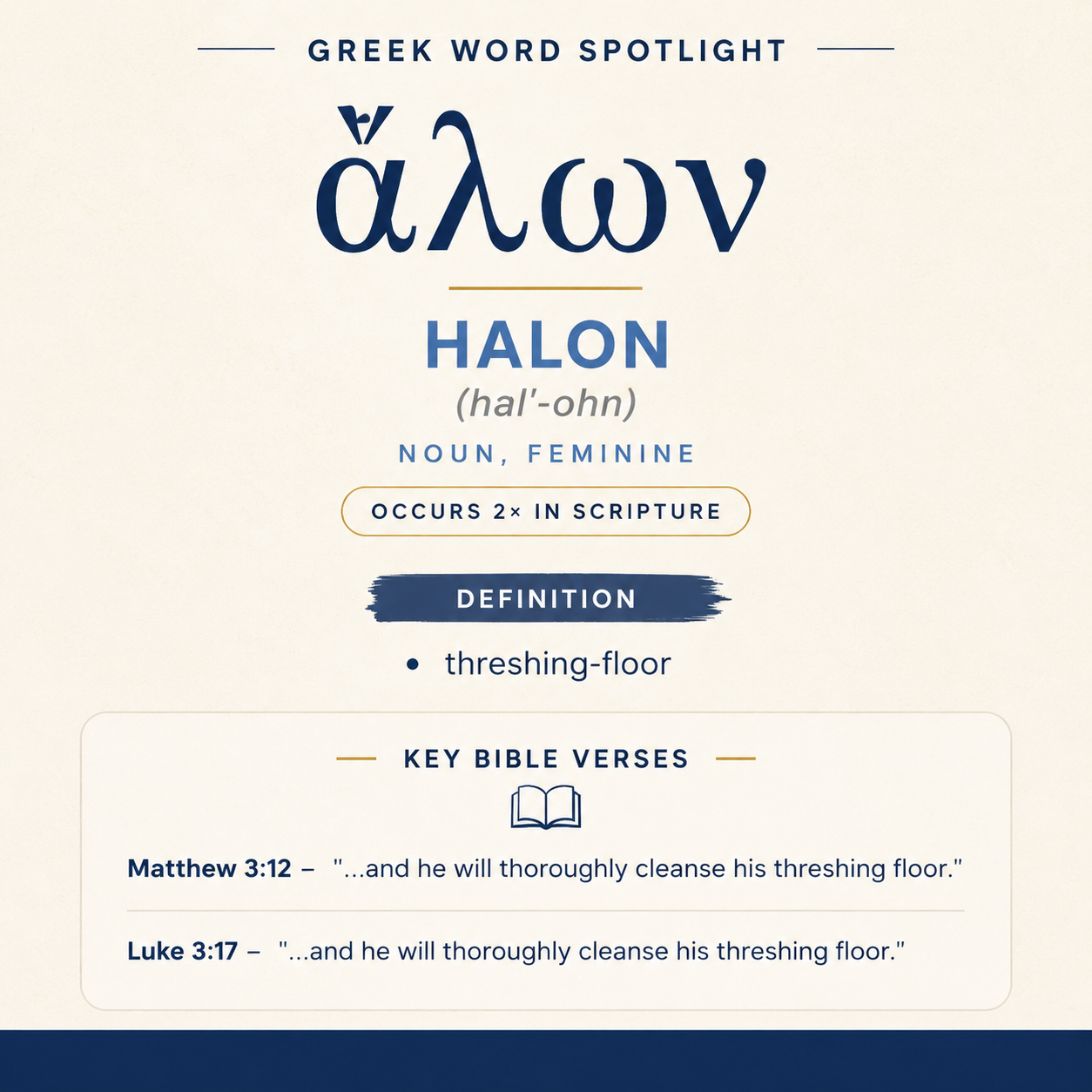
ἅλων (Halon) means “threshing-floor” and appears in Matthew 3:12 and Luke 3:17.
Scripture Occurrences
It occurs 2 times in Scripture. The references are Matthew 3:12 and Luke 3:17.
Learn More →Verse Context
In both verses, the threshing floor is described as being thoroughly cleansed. The text also mentions gathering wheat into a barn.
Learn More →ἅλων refers to a “threshing-floor,” and it appears in the preaching imagery of John the Baptist in the Synoptic tradition. In both contexts it functions as the setting for a vivid picture of cleansing and separation—wheat gathered, chaff burned.
Root and Related Words
Strong’s links ἅλων with the verb heilisso (εἱλίσσω, Strong’s G1507), “to roll up.”
Occurrences
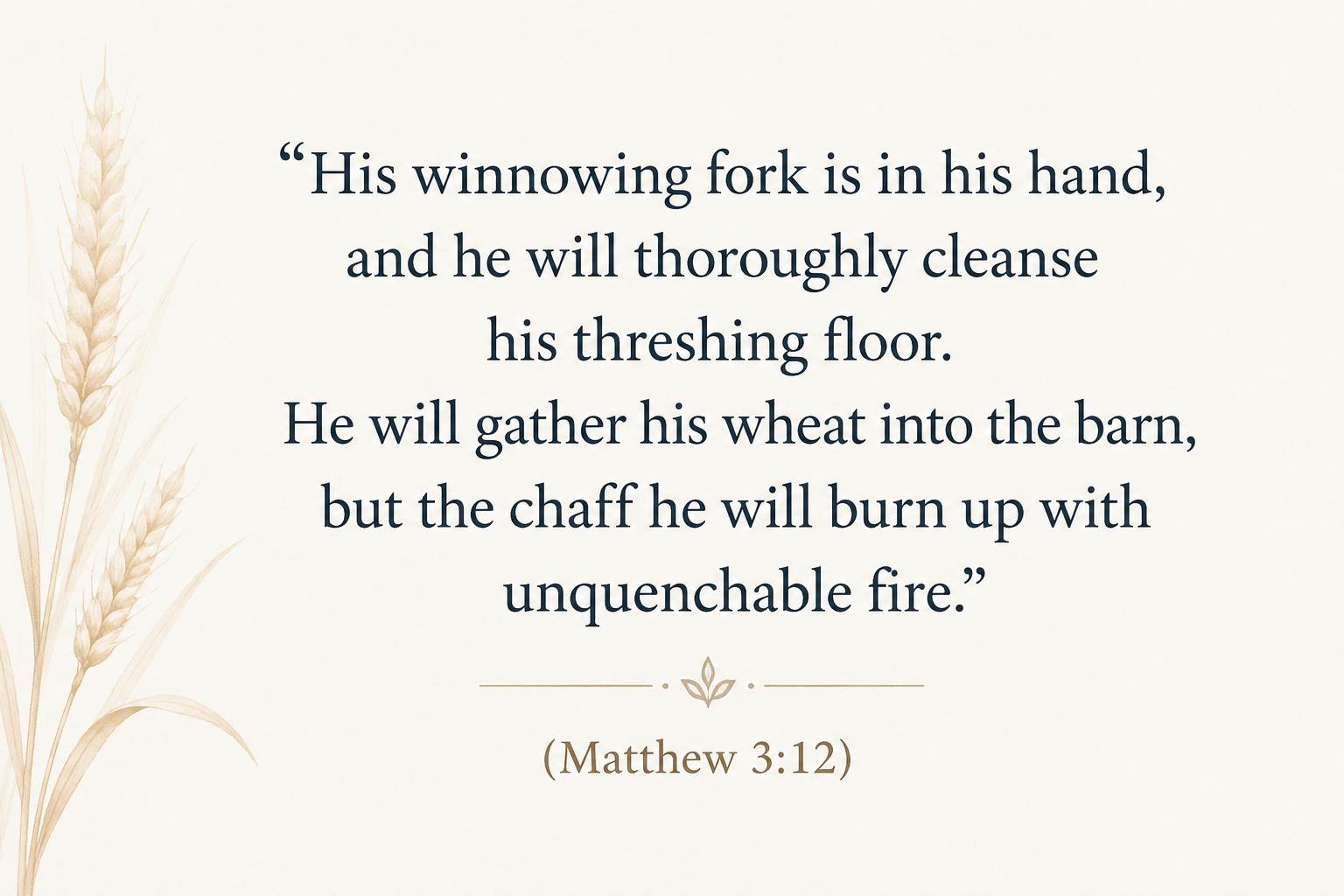
“His winnowing fork is in his hand, and he will thoroughly cleanse his threshing floor. He will gather his wheat into the barn, but the chaff he will burn up with unquenchable fire.” (Matthew 3:12)
Here ἅλων names the working space that belongs to the figure holding “His winnowing fork.” The threshing floor is presented as something that can be “thoroughly” cleansed, and the verse itself explains what that cleansing looks like: a decisive sorting in which “wheat” is gathered “into the barn,” while “the chaff” is assigned to burning. By placing the action on the threshing floor, the saying frames the whole scene as purposeful labor with a clear end: separating what is kept from what is removed. The word contributes a concrete location where the fork is used, and where the result of the work becomes visible—one pile gathered, another disposed of by fire described as “unquenchable.”
“whose fan is in his hand, and he will thoroughly cleanse his threshing floor, and will gather the wheat into his barn; but he will burn up the chaff with unquenchable fire.” (Luke 3:17)
In Luke’s parallel, ἅλων again identifies the threshing floor as the arena of cleansing. The statement begins with possession and readiness—“whose fan is in his hand”—and then moves to the thoroughness of the action: “he will thoroughly cleanse his threshing floor.” The phrase “his threshing floor” keeps the location tied closely to the agent; it is not a neutral patch of ground but a place under his authority, where he determines what remains and what is removed. As in Matthew, the threshing-floor scene immediately expands into the two outcomes: “gather the wheat into his barn” versus “burn up the chaff.” The word thus supports the verse’s internal logic: the cleansing is not an abstract idea but a concrete operation carried out in a defined place, producing an irreversible separation between wheat and chaff.
Sense and Usage
Across these two occurrences, “threshing-floor” functions as a compact image for a process that is both active and discriminating. In each saying, the threshing floor is paired with an instrument held “in his hand” (a “winnowing fork” in Matthew, a “fan” in Luke). The location and the tool belong together: the floor is the space where the tool is used, and the tool is the means by which the floor is “thoroughly” cleansed. This tight linkage gives ἅλων more than a mere backdrop role; it is the named site where cleansing is carried out.
The word also helps organize the movement of the sentence. First comes the readiness of the agent (the tool already in hand), then the action upon the threshing floor (a thorough cleansing), and then the consequences described in paired lines: the wheat gathered “into the barn,” the chaff burned “with unquenchable fire.” The threshing floor stands between intention and outcome: it is the stage of the decisive work that leads to two contrasting ends. In that way, ἅλων anchors the imagery in ordinary agricultural space, making the separation that follows feel concrete and visible.
Both passages present the threshing floor as something that can be cleansed completely—“thoroughly cleanse”—and as something that is owned: “his threshing floor.” The possessive language underscores control over the process and its results. The floor is not simply swept clean; it is cleansed by sorting, as the verse explains through the contrast of wheat and chaff. Thus, within these sayings, “threshing-floor” is the setting for a cleansing defined by separation and disposal: what is gathered is stored (“into the barn”), and what is removed is destroyed (“burn up … with unquenchable fire”).
The paired outcome language also clarifies how the threshing-floor image communicates finality. Gathering “wheat into the barn” implies a completed transfer from the working area to a secure place; burning “the chaff” implies a removal that does not reverse. The threshing floor is the threshold between these two destinations. By naming that place, ἅλων concentrates attention on the act of sorting itself as the turning point between preservation and destruction.
Imagery
In Matthew 3:12 and Luke 3:17, the threshing floor evokes a scene of open-air work where the difference between wheat and chaff becomes plain under deliberate action. The repeated emphasis on thorough cleansing and the immediate reference to gathering and burning make the threshing floor a vivid picture of decisive separation: a place where what is valuable is collected and stored, and what is weightless and unwanted is removed and consumed by fire described as “unquenchable.”
Sources: Lexical data from Strong’s Exhaustive Concordance and the Translators Brief Lexicon of Extended Strongs for Greek (STEPBible, CC BY). Occurrence data from the Translators Amalgamated Greek New Testament (STEPBible, CC BY). Scripture quotations from the World English Bible (public domain).